
Bathroom Mirror Trends 2026: What Is Actually Changing?
Bathroom mirror trends 2026 are moving beyond the idea that a better mirror simply needs more electronic features. Hotel, commercial and residential-project buyers are paying more attention to useful lighting, practical controls, installation requirements and consistent product performance.
A mirror can look impressive in a product photo and still create problems in real use. Backlighting may not provide enough facial illumination, a motion sensor may activate at the wrong time, or a wall switch may not work in the way the project expects.
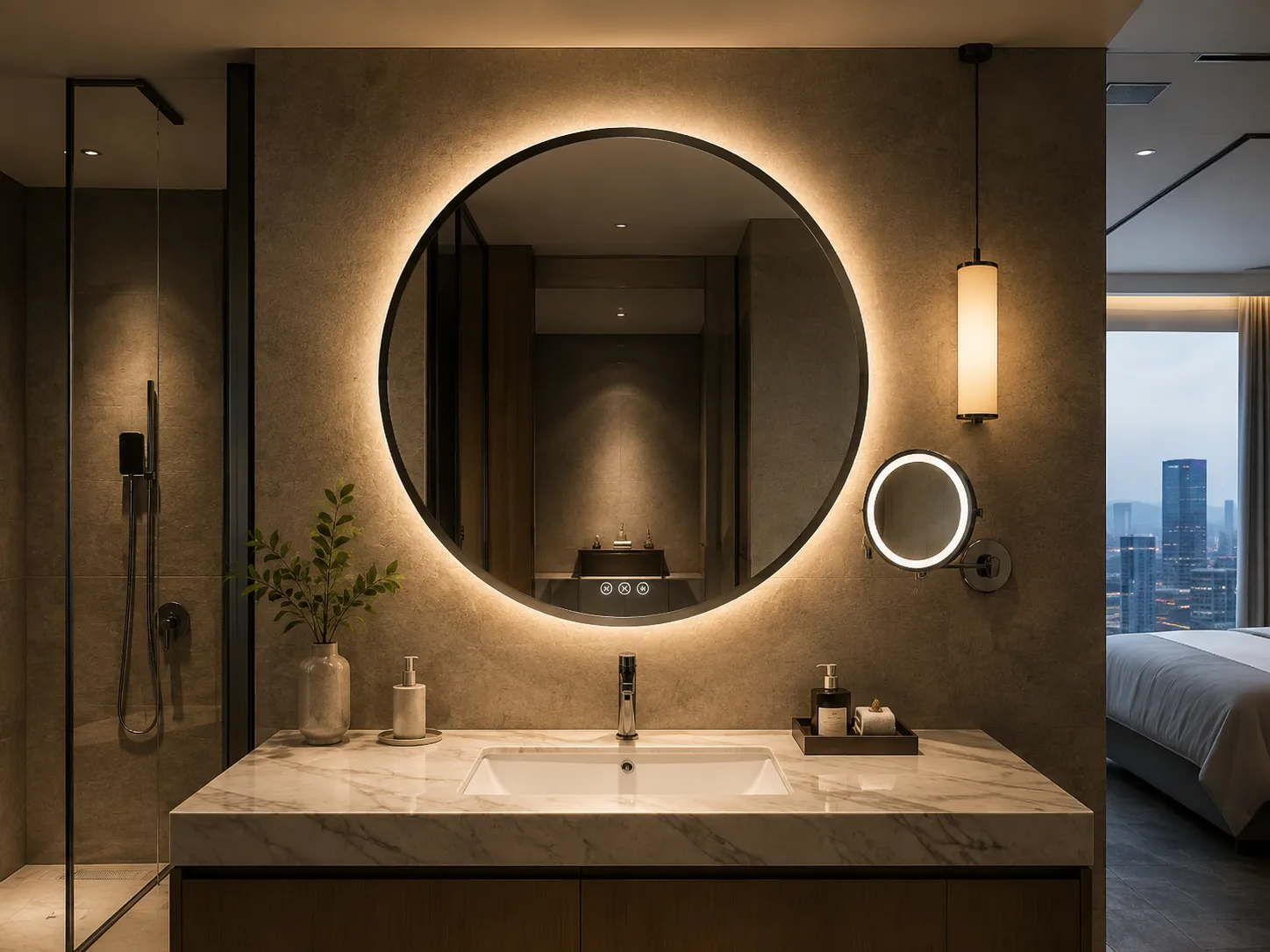
The strongest direction for 2026 is not feature overload. Better task lighting, practical smart functions, reliable control logic, consistent LED performance and project-specific configurations are becoming more important.
1. Backlit, Front-Lit and Dual-Light Mirrors Serve Different Needs
One of the most common buying mistakes is treating all illuminated mirrors as if they provide the same type of light. An LED bathroom mirror can illuminate the wall behind the glass, direct light toward the user, or combine both effects.
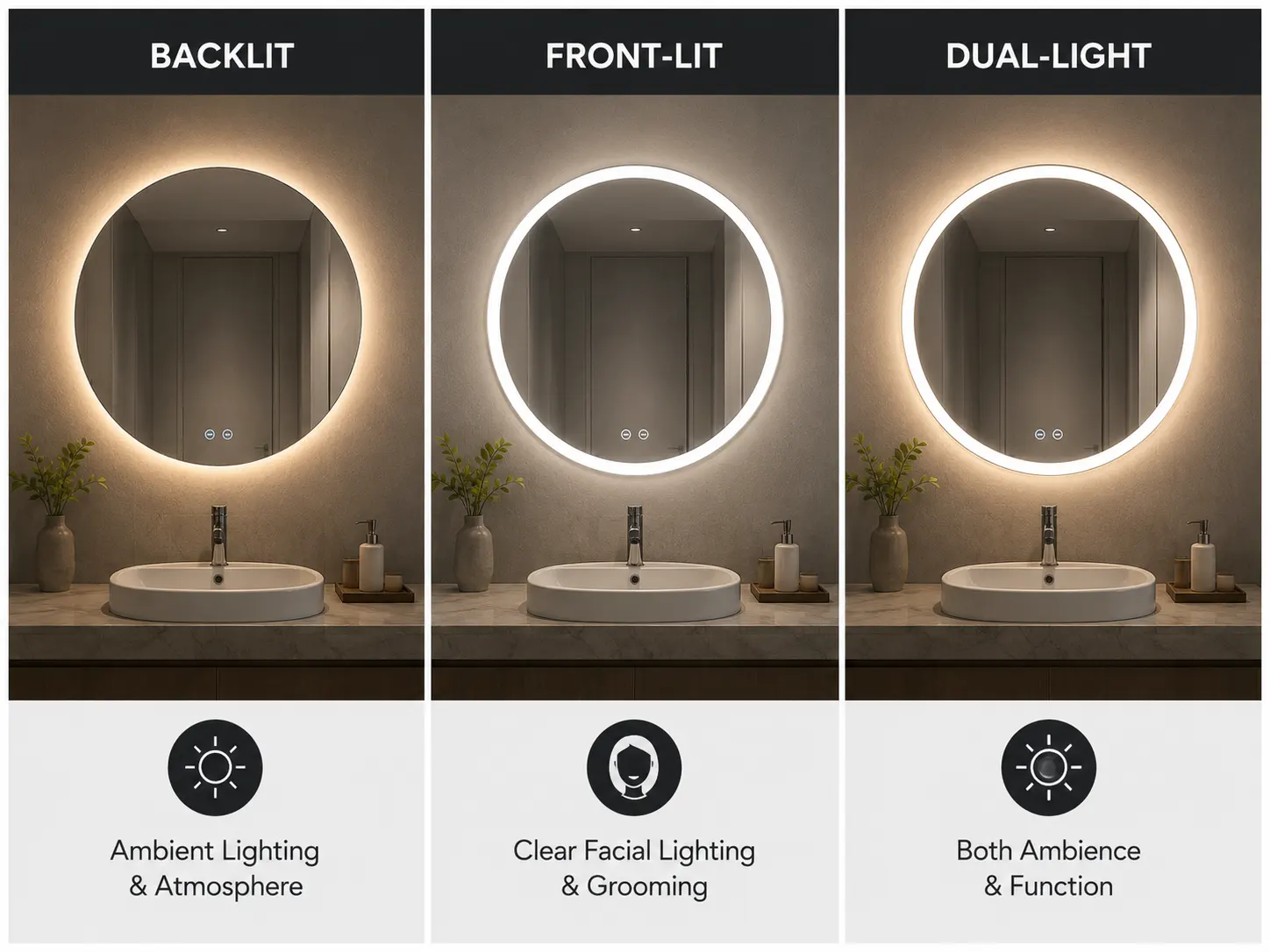
A backlit bathroom mirror sends light toward the wall and creates a soft halo around the glass. This effect works well when a hotel or commercial bathroom needs visual depth and ambient lighting. However, rear illumination should not automatically be treated as the main light for shaving, skincare or makeup.
Front-lit designs direct more illumination toward the user's face, making them better suited to grooming tasks. Dual-light mirrors combine frontal task lighting with rear ambient light and can work particularly well in premium hospitality bathrooms where both usability and atmosphere are important.
Explore NISSIYA bathroom mirror solutions for different lighting structures and project applications.
Bathroom Mirror Trends 2026: Practical Smart Functions Matter More
A smart bathroom mirror does not become more useful simply because more electronics are added. Functions that solve everyday bathroom problems usually provide more practical value than features that look impressive on a specification sheet but are rarely used.
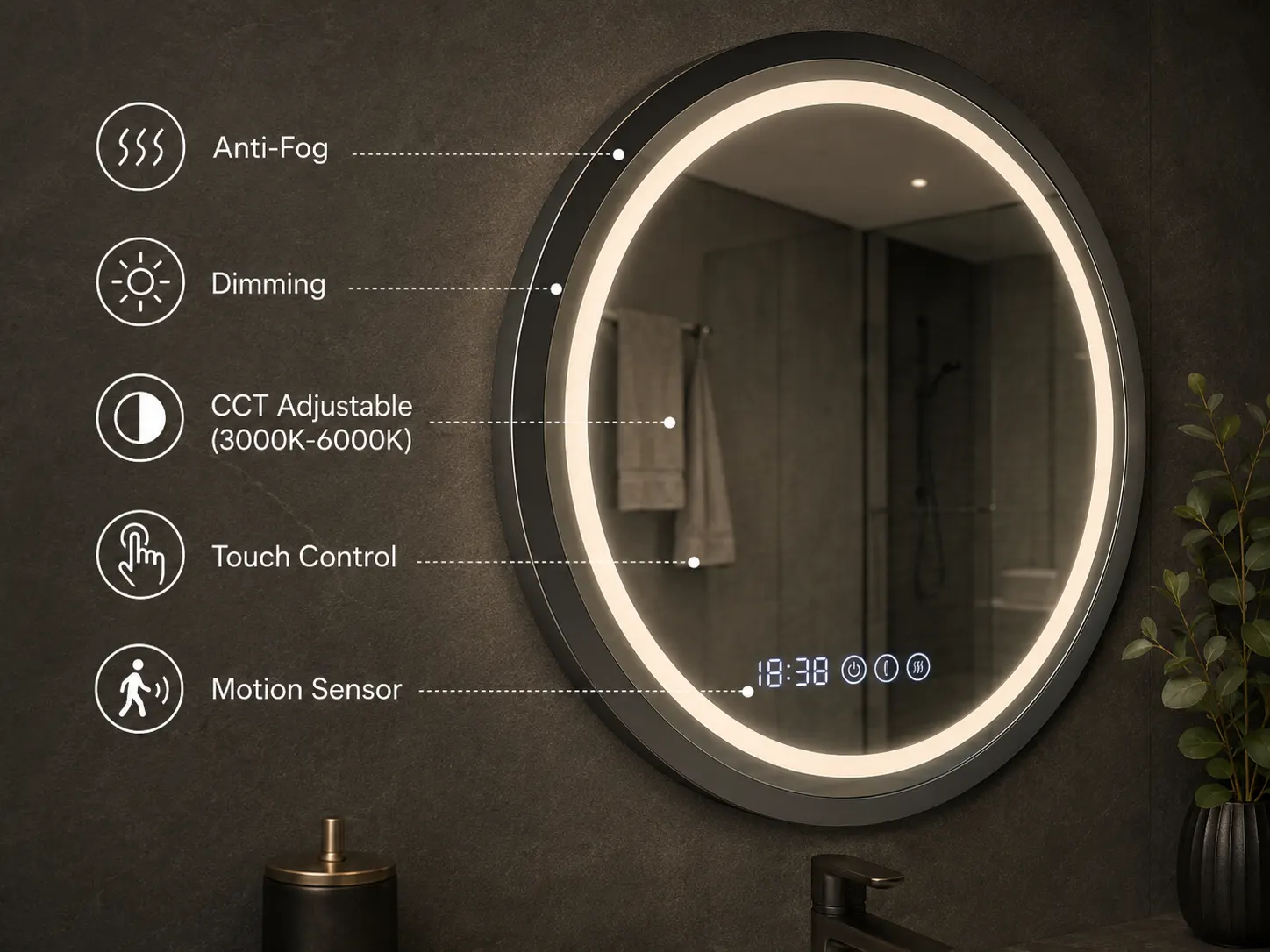
Anti-fog heating is particularly useful where steam regularly covers the mirror after a shower. In a hotel bathroom mirror, guests may expect the glass to remain usable shortly after bathing. The heated area and control method should therefore be confirmed for the selected model.
Dimming gives users more flexibility than fixed brightness, while adjustable color temperature can support different moods and tasks. Warm light can create a softer atmosphere, neutral light suits general use, and cooler white illumination can create a brighter task-oriented appearance.
Bluetooth speakers, digital displays and other entertainment functions may suit selected retail products. For many hotel and commercial projects, however, anti-fog, dimming, suitable CCT options and reliable controls are likely to offer more everyday value.
See one current example in the Round Gunmetal Smart LED Bathroom Mirror .
3. Control Logic Is Becoming Part of the Mirror Specification
Touch controls, wall switches and motion sensors can all be useful, but they solve different problems. The right choice depends on how the mirror will be used and how the bathroom electrical system is designed.
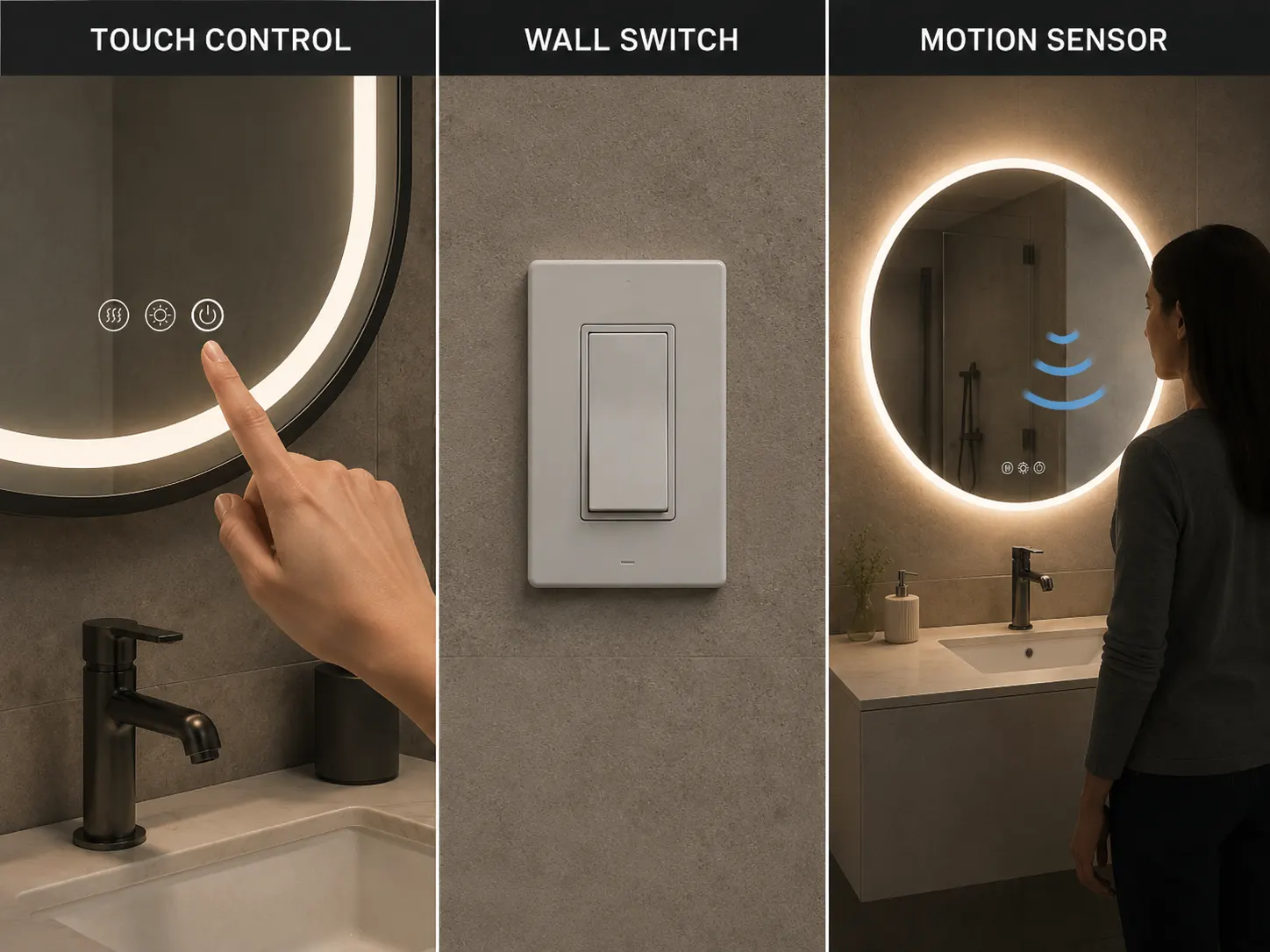
Touch controls work well when users need direct access to brightness, lighting modes or anti-fog functions. Hotel projects may instead require the mirror to work through a conventional wall switch or room-control system. That behavior should be confirmed before production because wiring and driver configuration can depend on the required operating logic.
Memory function is another detail worth checking. If power is turned off at the wall, some projects want the mirror to return to its previous brightness or color setting when power comes back. This requirement should be included during sample approval rather than assumed.
Motion sensors can offer convenient hands-free activation, but sensing distance, angle, position and delay time all affect performance. A sensor that is too sensitive may activate unnecessarily, while one with insufficient range can make the mirror frustrating to use.
Test the actual touch, wall-switch, memory and sensor behavior on the approved sample instead of relying only on the feature names shown in a specification sheet.
Bathroom Mirror Trends 2026: Lighting Quality and Consistency Matter More
Good bathroom mirror lighting cannot be evaluated by wattage alone. Light distribution, diffusion, color rendering, color temperature and driver performance all influence the final user experience.
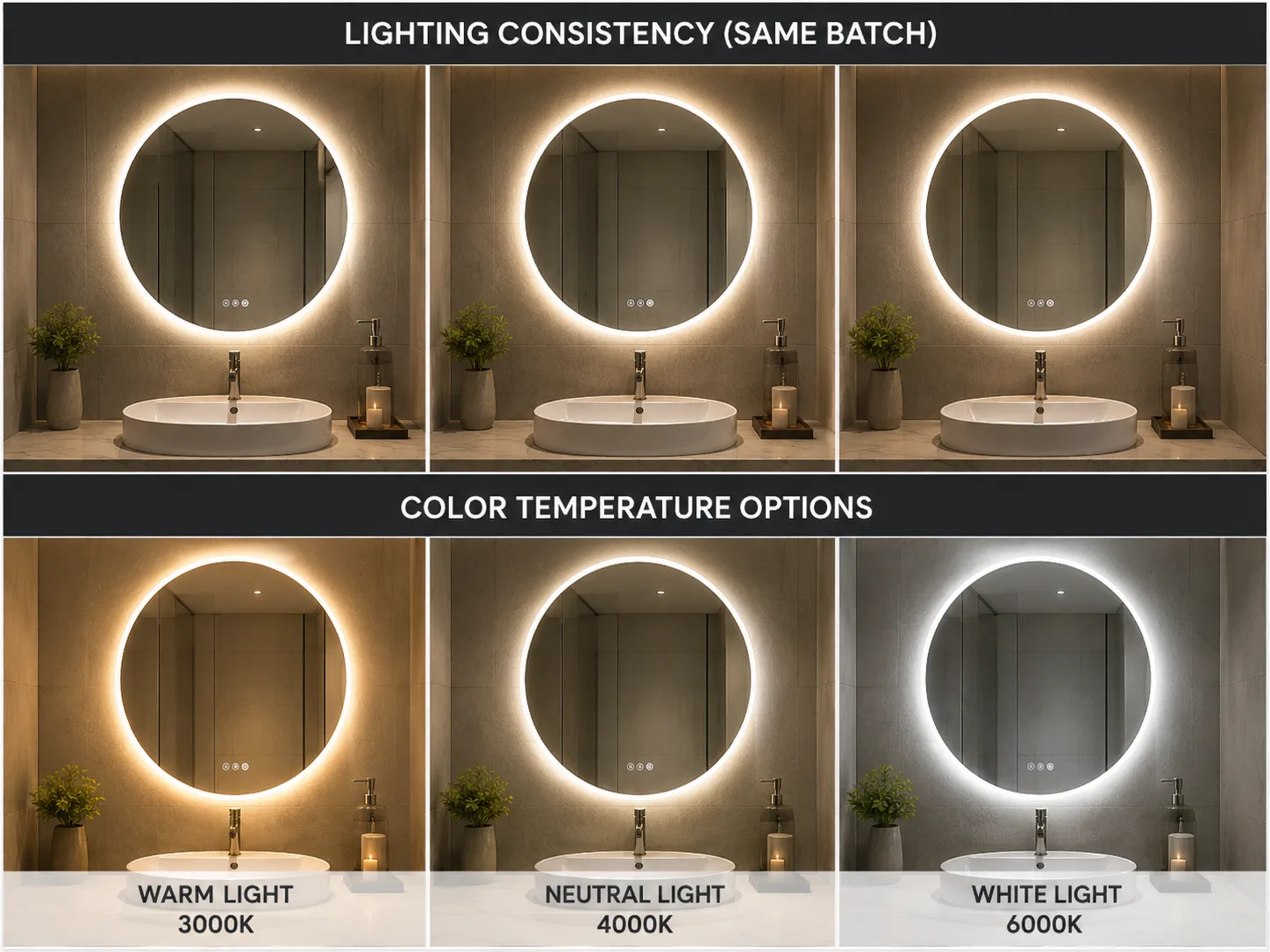
CRI and CCT describe different aspects of light. Color temperature indicates whether illumination appears warmer or cooler, while CRI relates to how naturally colors are rendered under that light. Both can influence the experience of skincare, shaving and makeup.
Batch consistency deserves additional attention in hospitality projects. A slight difference may be difficult to notice when viewing one sample, but mismatched brightness or color temperature can become obvious when similar rooms are compared.
Lighting stability also depends on more than the LED strip. Driver performance, dimming compatibility, electrical conditions and component selection can contribute to flicker. For this reason, buyers should evaluate the complete lighting system rather than comparing only LED power.
Learn more about the construction behind illuminated mirrors in our LED bathroom mirror structure guide .
5. Bathroom Mirrors Are Becoming Part of the Complete Project
Another important development within bathroom mirror trends 2026 is the shift from selecting a mirror as an isolated decorative product to specifying it as part of the overall bathroom design. Vanity width, wall dimensions, lighting, hardware finishes, wiring and installation all influence the final choice.
Mirror dimensions should relate to the vanity and available wall area. A compact single-vanity bathroom may need a completely different proportion from a large hotel bathroom with a wide countertop or double vanity.
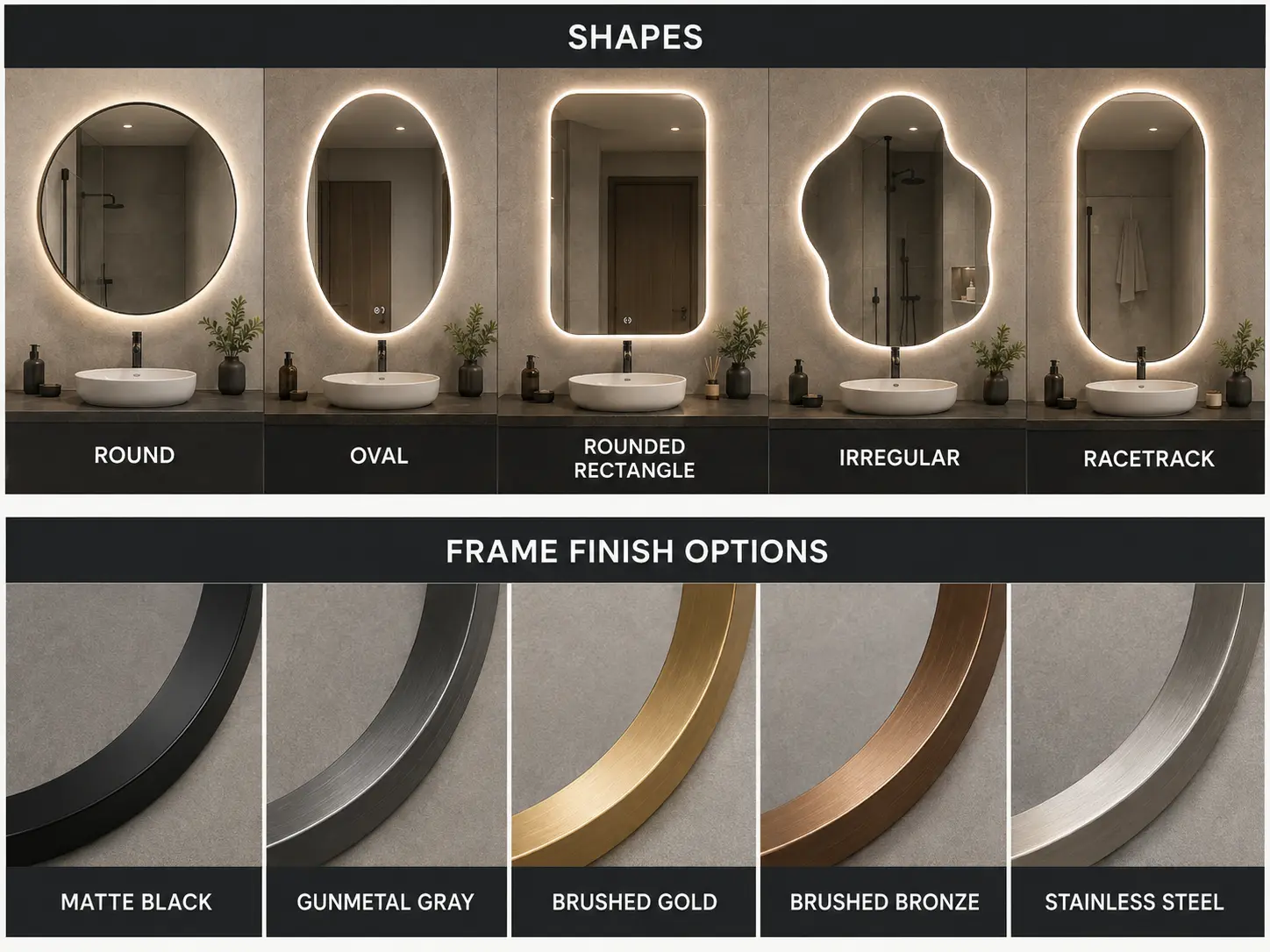
Shape also affects both appearance and usable mirror area. Round and oval mirrors create softer lines, rounded rectangles offer a balance between modern styling and practical reflection area, while irregular mirrors can become a stronger decorative element.
Frame finishes should coordinate with surrounding bathroom hardware rather than being selected only because a color is fashionable. Matte black, gunmetal gray, brushed gold, bronze and stainless-steel tones can help connect the mirror visually with faucets, shower fittings and accessories.
Installation details are equally important. Mounting hardware, wall construction, electrical position, product weight and maintenance access should be considered before the final specification is approved.
Explore the NISSIYA irregular LED bathroom mirror or read our guide to bathroom mirror mounting systems .
Which Mirror Configuration Fits Your Project?
There is no single mirror type that suits every bathroom. Start with the main project requirement, then decide which lighting structure and control method best supports it.
| Project Requirement | Direction to Consider | Why |
|---|---|---|
| Luxury hotel atmosphere | Backlit mirror | Creates soft architectural wall glow. |
| Clear grooming illumination | Front-lit mirror | Directs more light toward the user's face. |
| Premium multifunction bathroom | Dual-light mirror | Combines task lighting with ambience. |
| Guest-adjustable lighting | Dimming + adjustable CCT | Supports different brightness and lighting preferences. |
| Hotel room-control integration | Wall-switch-compatible setup | Can fit the planned electrical-control logic. |
| Hands-free use | Motion sensor | Adds convenience when detection is configured correctly. |
What Buyers Should Confirm Before Ordering
A complete specification helps prevent misunderstandings between sample approval and bulk production. The following points are worth reviewing according to the needs of the project.
- Confirm mirror dimensions and proportion.
- Select the required mirror shape.
- Review the glass specification.
- Choose the lighting structure.
- Define brightness and CCT needs.
- Check CRI requirements where relevant.
- Decide whether dimming is needed.
- Evaluate the anti-fog requirement.
- Determine the preferred control method.
- Verify wall-switch compatibility.
- Specify memory behavior if required.
- Test motion-sensor operation where used.
- Verify electrical input requirements.
- Review the driver configuration.
- Select the frame material and finish.
- Check the mounting method.
- Confirm installation clearance.
- Review applicable market requirements.
- Review batch lighting consistency.
- Confirm finish consistency.
- Agree on project packaging.
- Discuss maintenance needs.
- Confirm replacement support where relevant.
- Finalize OEM or ODM requirements.
What Bathroom Mirror Trends 2026 Mean for B2B Buyers
For B2B sourcing, the biggest change is not one particular shape or smart function. The stronger shift is toward selecting a configuration that fits the project and can be produced consistently across the complete order.
Hotel developers usually need repeatable appearance and operation across many rooms. Distributors often value products that are easy to explain and position in their market, while contractors pay close attention to wiring, mounting and installation requirements.
Retail and private-label programs may add branding and packaging considerations. Starting with the intended application makes it easier to decide which functions add genuine value and which features may simply increase cost or complexity.
One approved sample is therefore only the beginning. Dimensions, finish, lighting performance, control behavior and packaging should remain aligned with the final agreed specification during bulk production.
Learn more about NISSIYA hospitality mirror solutions and mirror packaging solutions for hotel projects .
Questions Buyers Actually Ask About Smart Mirrors
Is a backlit mirror bright enough for shaving or makeup?
Backlighting mainly creates ambient wall illumination. If clear facial lighting is the main requirement, front-lit or dual-light designs should also be evaluated together with the other bathroom lighting.
Is an anti-fog mirror worth adding?
Anti-fog heating can be useful where shower steam regularly causes condensation. The heated area and operating method should be confirmed for the selected mirror model.
Should a hotel use touch control or a wall switch?
Touch control gives guests direct access to mirror functions, while wall-switch operation may integrate more naturally with a hotel's electrical plan. The required behavior should be specified before production.
Can a motion sensor activate accidentally?
It can if the sensing distance, angle or position does not suit the bathroom layout. Testing the sensor on the project sample is more useful than checking only whether a sensor is included.
Which color temperature is best for a bathroom mirror?
There is no single setting that suits every bathroom. Warm, neutral and cooler white lighting create different atmospheres and should be selected according to the intended user experience.
Why do some illuminated mirrors flicker?
LED driver performance, dimming compatibility, electrical conditions and other components can affect lighting stability. Wattage alone does not describe the quality of the complete lighting system.
What should hotel buyers confirm before bulk production?
Confirm dimensions, lighting, controls, electrical requirements, mounting, applicable market requirements, finish consistency, packaging and maintenance needs before approving bulk production.
How NISSIYA Supports Bathroom Mirror Projects
NISSIYA supplies bathroom mirror solutions for hospitality, distributors, retailers, contractors and commercial projects. Depending on the selected model and project requirements, buyers can discuss available dimensions, mirror shapes, frame finishes, lighting configurations, smart functions, control systems, branding and packaging.
Final technical and visual requirements should be agreed before bulk production so that lighting, controls, appearance, electrical details, installation and packaging follow the approved project specification.
Related Bathroom Mirror Resources
Discuss Your Bathroom Mirror Project with NISSIYA
Share your mirror dimensions, quantity, lighting requirements, smart functions, frame finish, target market and project needs with NISSIYA. Our team can discuss suitable mirror configurations for hospitality, commercial, distribution and private-label programs.
www.nissiya.com | WhatsApp: +86 189 2321 4528
Ready to Start Your Next Hospitality Project?
From initial design concepts to final product delivery, NISSIYA provides full-scale manufacturing support for hotels, resorts, and commercial developments worldwide. Let our engineering team help you translate your vision into reality with precision-engineered, commercially compliant mirror solutions.