
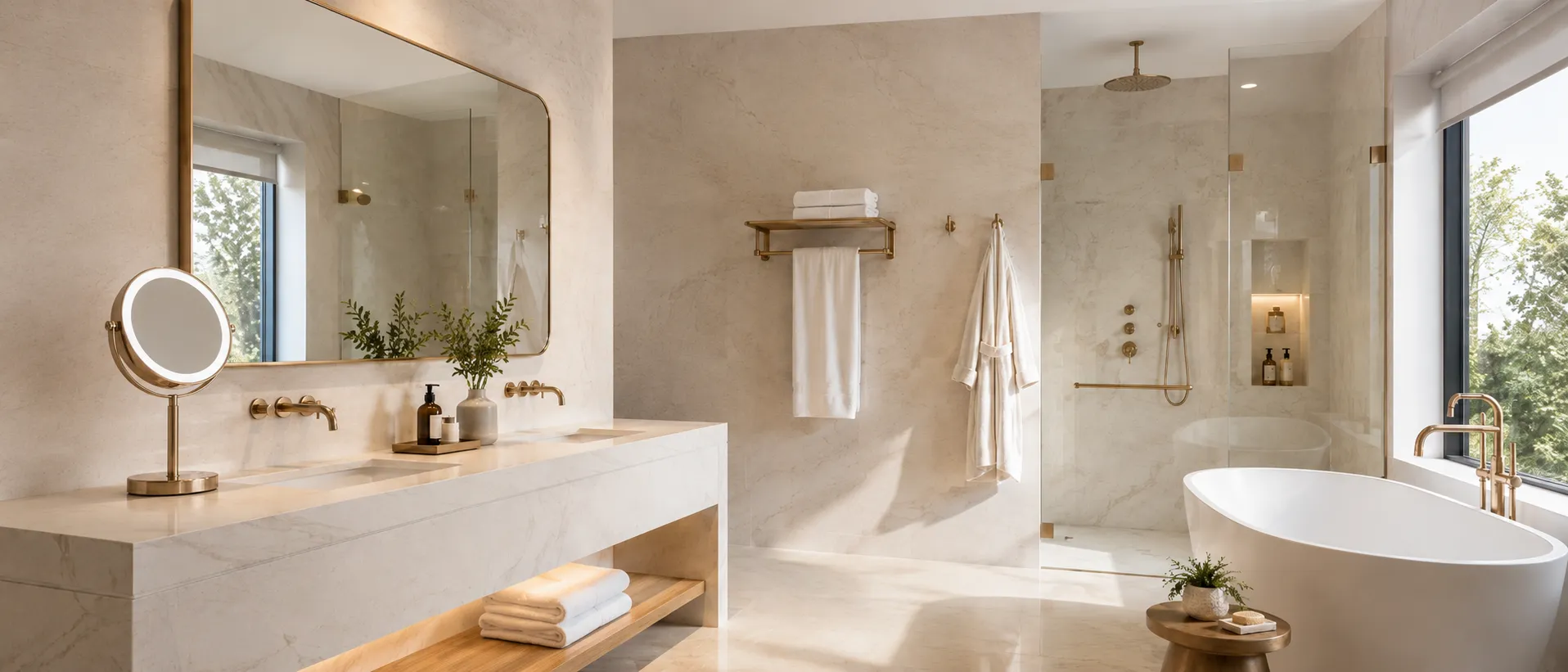

BATHROOM MIRROR INSTALLATION
Bathroom Mirror Mounting Systems for Commercial Projects
Different bathroom mirrors require different mounting solutions depending on size, weight, structure and installation environment. Choosing the proper mounting system helps improve installation efficiency, stability and long-term maintenance in hotel and commercial projects.
- Split Bracket with Chassis
- Gourd Hole Mounting
- Z-Bar Installation
- Dovetail Hook System
- Suitable for Different Mirror Structures
- Easier On-Site Installation
- Better Maintenance Accessibility
Bathroom Mirror Mounting System Comparison
Choosing the Right Mounting System
Bathroom mirrors vary in size, weight, frame structure and installation requirements. A small frameless mirror may need a simple fixing method, while a large framed or illuminated mirror may require stronger support and easier access for maintenance.
Selecting the correct bathroom mirror mounting systems helps improve installation efficiency, wall stability and long-term product performance. The mounting method should be confirmed before production so that the mirror structure, wall preparation and installation hardware remain compatible.
Common Bathroom Mirror Mounting Methods
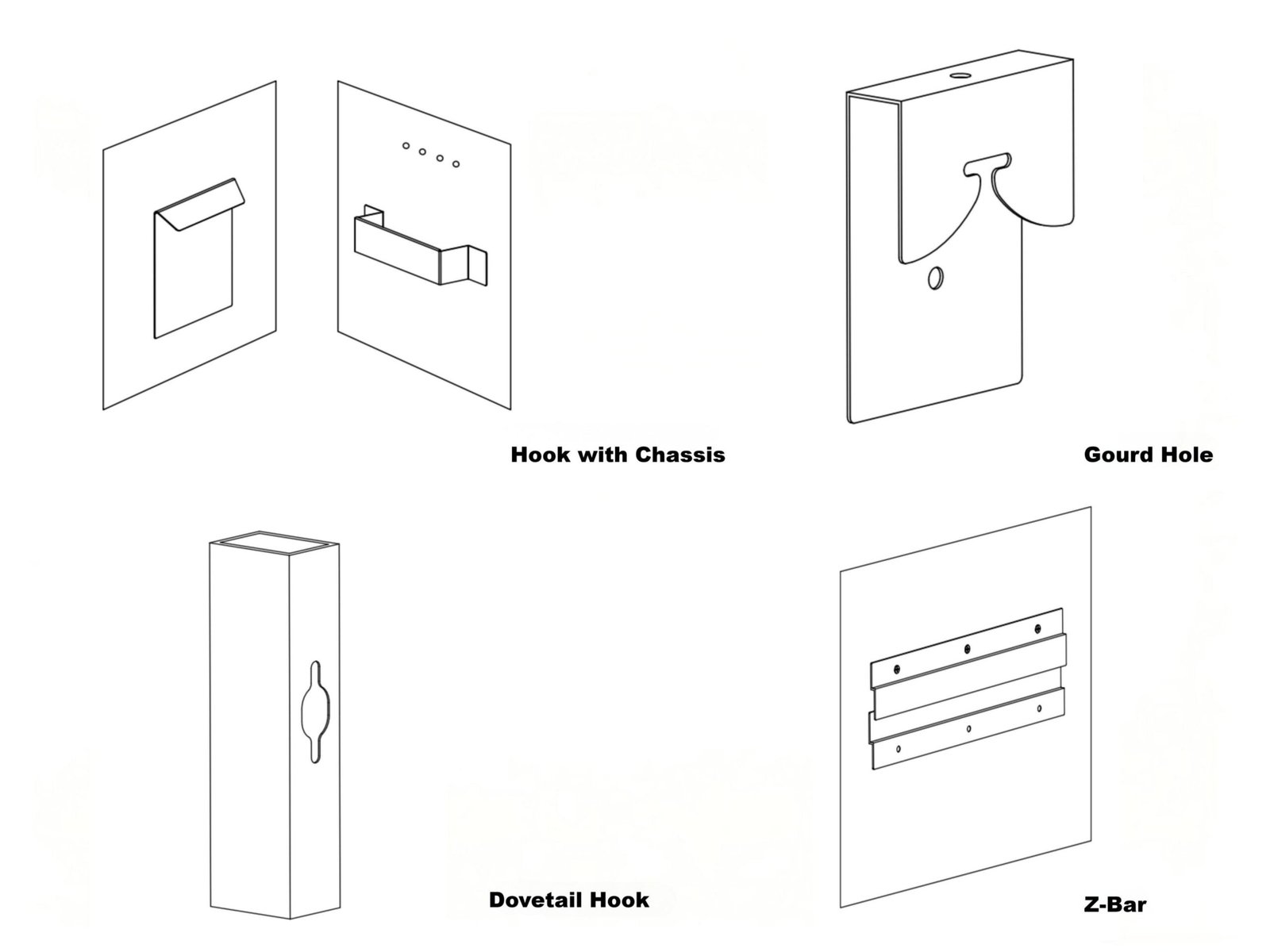
Split Bracket with Chassis
A split bracket system separates the wall-mounted base from the mirror body. The chassis is fixed to the wall first, and the mirror is then connected to the supporting structure.
This method can make installation, wiring and future maintenance easier, especially for mirrors with lighting or electrical components.
Gourd Hole Mounting
Gourd holes, also known as keyhole slots, allow the mirror to hang directly onto screws installed in the wall.
This is a simple and space-saving solution for lighter mirrors. Accurate screw spacing and careful leveling are important to ensure secure installation.
Dovetail Homok Syste
A dovetail hook uses a shaped slot and matching fixing point to hold the mirror securely.
The structure is compact and suitable for mirrors that require concealed mounting. Correct positioning is essential because adjustment may be limited after installation.
Z-Bar Installation
A Z-bar system uses two interlocking metal rails—one fixed to the wall and one attached to the back of the mirror.This method distributes weight across a wider area and is often suitable for larger or heavier bathroom mirrors. It also allows easier leveling, removal and replacement during future maintenance..
What Should Be Confirmed Before Installation?
Before selecting a mounting method, project teams should confirm:
1. Mirror size and total weight
2. Wall material and load capacity
3. Framed or frameless structure
4. Wiring and connection position
5. Installation height and clearance
6. Access for future maintenance
7. Required mounting hardware
For projects with multiple room types, approved installation drawings should clearly show hole positions, bracket dimensions and mounting height. Consistent mounting details help reduce on-site errors and improve installation speed.
The best mounting system is not always the most complex one. It should provide the right balance of safety, installation efficiency, structural stability and maintenance access for the specific bathroom mirror.
Ready to Plan Your Bathroom Mirror Installation?
From mounting system selection to installation drawings and hardware preparation, NISSIYA provides practical support for bathroom mirror projects. Our team helps match the right fixing method to the mirror size, weight, wall condition and maintenance requirements for safer and more efficient installation.