

Technical Structure Guide
Understanding LED Bathroom Mirror Structure
An LED bathroom mirror structure determines how the mirror glass, frame, lighting system, driver, controls, defogger, wiring and mounting components are arranged behind the finished product.
The internal layout affects installation, maintenance access, customization and production efficiency. Buyers commonly compare a split type LED bathroom mirror with an integrated type LED bathroom mirror before confirming an OEM, ODM or commercial project specification.

LED MIRROR STRUCTURE
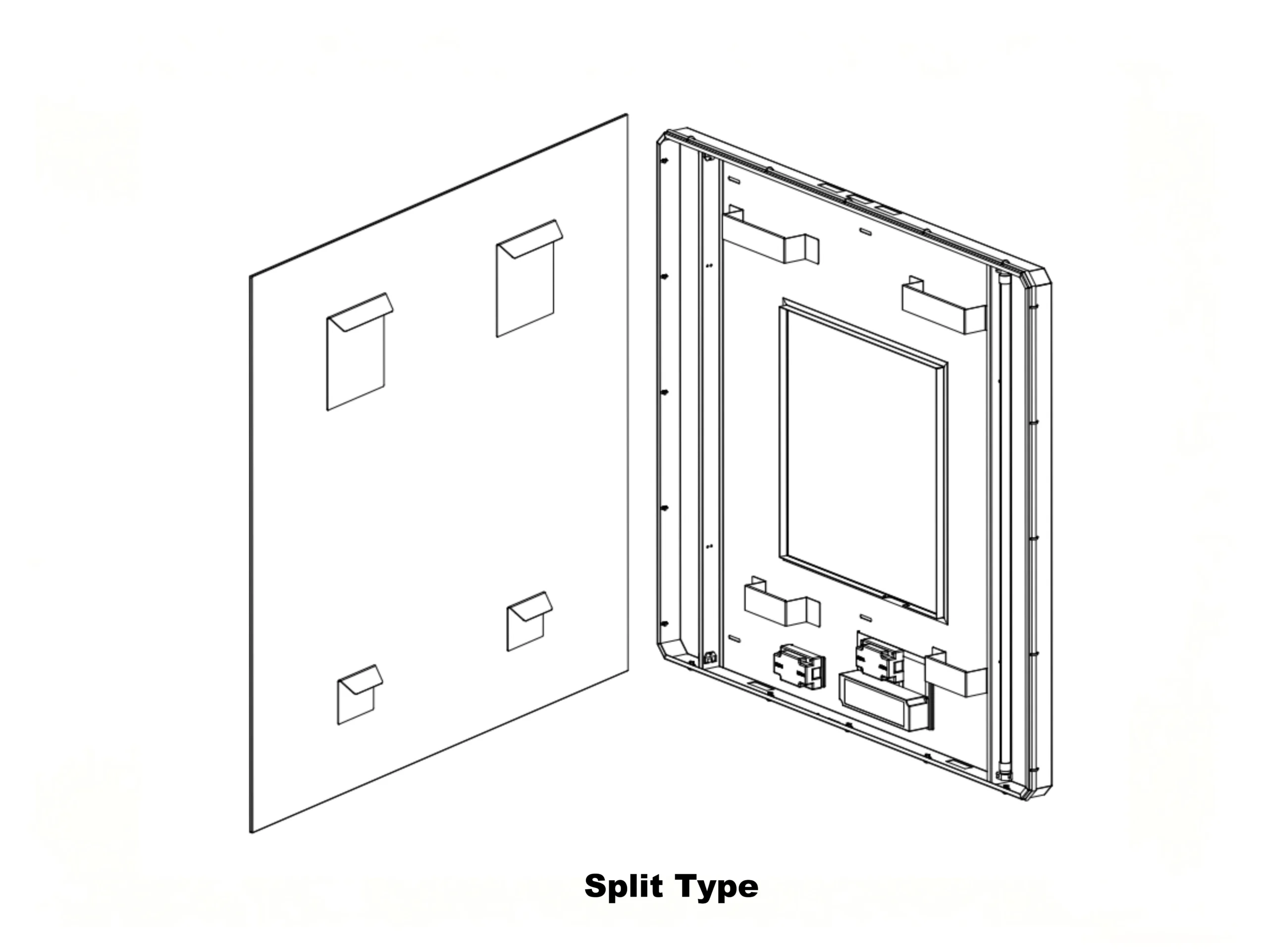
What Is a Split Type LED Bathroom Mirror Structure?
Split type LED bathroom mirror uses a separated structure where some electrical components are installed independently from the mirror body.This LED bathroom mirror structure allows easier access to components such as LED drivers, sensors and control modules during installation and maintenance.
- Easy Maintenance: The separated design allows easier access to LED drivers, sensors, and electrical components during maintenance.
- Flexible Installation: The split structure provides more flexibility for customized wall conditions and project requirements.
- Suitable for Customized Projects: This structure is commonly selected for OEM/ODM projects requiring different sizes, functions, and installation solutions.
LED MIRROR STRUCTURE
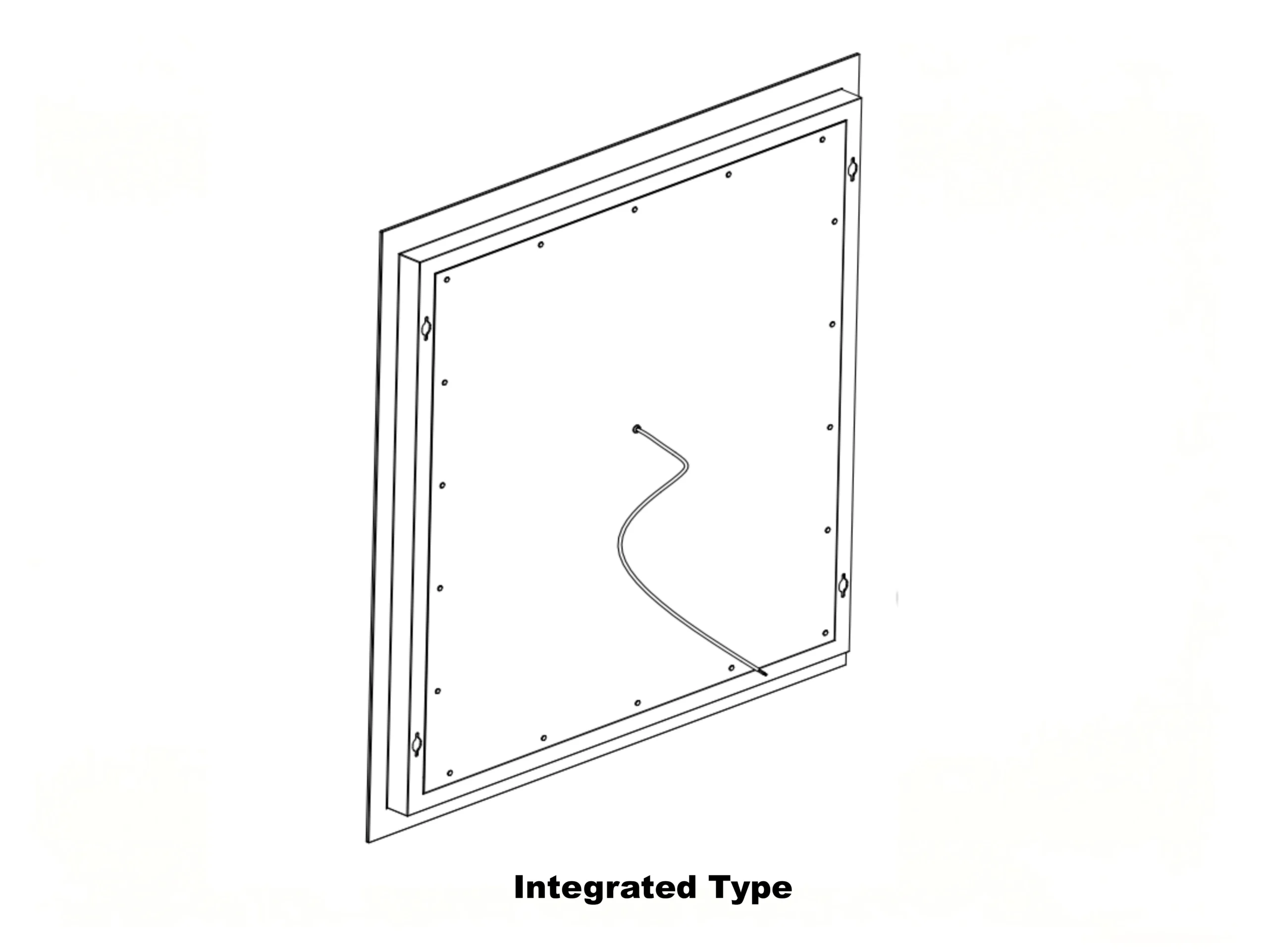
What Is an Integrated Type LED Bathroom Mirror Structure?
Integrated type LED bathroom mirror combines the LED lighting system and electrical components into one complete structure.Compared with split type designs, this LED bathroom mirror structure provides a more compact and standardized solution.
- Simple Installation: The complete structure makes installation more efficient for standard projects.
- Stable Production Quality: Integrated designs allow manufacturers to control production processes more effectively.
- Cost Efficient Solution: This structure is suitable for large-volume projects requiring consistent specifications.
Technical Comparison Matrix
Split Type vs Integrated LED Bathroom Mirror Structure
Main difference between the two LED bathroom mirror structure options is how the rear components are arranged. A split type design prioritizes component access and flexible customization, while an integrated structure supports compact assembly and standardized production.
Technical Factor
Compare structure, installation, maintenance and project use.
Split Type
Separated rear components and a more flexible internal layout.
Integrated Type
Compact rear assembly designed for standardized production.
Component Layout
Selected components remain separate
Drivers, controls or connection modules can be positioned separately from the main mirror body.
Flexible LayoutComponents form one rear assembly
Lighting system and electrical components are organized within a compact, enclosed structure.
Compact AssemblyMaintenance Access
Easier access to selected components
Separated design can make inspection, replacement and electrical maintenance more convenient.
Access depends on the enclosed panel
Maintenance may require opening or removing part of the rear assembly to reach internal components.
Installation
Flexible for customized wall conditions
Component positions can be adjusted according to wiring, wall recesses and project installation requirements.
Efficient for standardized installation
A complete rear structure supports repeatable installation when wall and electrical conditions are consistent.
Customization
Higher layout flexibility
Suitable for OEM and ODM LED mirrors with different sizes, control systems, sensors and project-specific rear layouts.
Controlled customization
Product functions can still be customized, although the rear structure usually follows a more standardized design.
Production Efficiency
Suitable for varied project specifications
Production may require more component positioning and configuration checks across customized orders.
Supports consistent batch assembly
The standardized internal structure can improve repeatability for distributors and higher-volume production.
Typical Project Use
Customized hotel and commercial projects
Often selected when maintenance access, wall conditions or customized functions are important.
Project FlexibilityDistribution and standardized developments
For repeat orders, consistent specifications and efficient installation across multiple units.
Batch ConsistencyChoose Split Type When…
- Easier access to drivers and controls is important
- Wall or wiring layout requires flexibility
- Project uses several customized functions
- Maintenance accessibility is a purchasing priority
Choose Integrated Type When…
- Compact rear assembly is preferred
- Installation conditions are standardized
- The order requires consistent batch production
- Same specification will be repeated across many units
Internal Component System
Key Components of an LED Bathroom Mirror Structure
A complete LED bathroom mirror structure combines mechanical, lighting, electrical and mounting components. Their position and accessibility determine how the mirror is assembled, installed, tested and maintained.
Exploded Structure Drawing · 02
LED Mirror Internal Structure
The diagram illustrates a typical component sequence. Actual construction varies between split type, integrated, front-lit and backlit LED bathroom mirror structures.
Component Reference
What Each LED Mirror Component Does
The exact LED bathroom mirror components depend on the confirmed lighting, control, defogging and mounting configuration.
Mirror Glass
Provides the reflective surface and may include frosted lighting areas, safety backing or custom edge processing.
LED Lighting System
Includes LED strips, light guides or diffusers for front-lit, backlit or dual-light mirror configurations.
Frame and Support Structure
Supports the mirror body, controls product depth and helps position lighting, electrical and mounting components.
Back Panel
Covers or supports the rear system and may include access areas for installation, wiring and maintenance.
LED Driver
Converts and regulates electrical power for the LED lighting system. Its position affects heat management and maintenance access.
Touch Control or Sensor
Controls lighting, dimming, color temperature, defogging or sensor functions according to the selected model.
Defogger and Internal Wiring
The defogger pad provides localized heating, while cables and connectors link the LED mirror electrical components.
Mounting System
Brackets, hanging rails or rear mounting points connect the mirror securely to the prepared wall structure.
Project Selection Guide
How to Select an LED Bathroom Mirror Structure
The appropriate LED bathroom mirror structure depends on the project environment, installation conditions, maintenance expectations, order quantity and level of product customization—not only the appearance of the mirror.
Hotel and Hospitality Projects
Guest rooms, suites, public bathrooms and hospitality spaces
Hotel LED bathroom mirrors may require customized sizes, lighting functions, frame finishes and electrical layouts across different room types.
Split or integrated structure, selected according to the installation and maintenance plan
- Choose split type when component access is important
- Choose integrated type for standardized room layouts
- Confirm wall wiring and mounting details before production
Residential Developments
Apartments, condominiums and multi-unit bathroom projects
Custom LED mirrors for residential projects often require a balance between installation efficiency, product depth, electrical functions and repeatable specifications.
Customized integrated structure or controlled split-type layout
- Standardize the rear structure across repeated units
- Confirm depth, wiring outlet and mounting positions
- Review touch controls, defoggers and lighting requirements
Distribution and Volume Supply
Retail collections, distributors and repeat production
Integrated LED mirrors for distributors can support stable assembly, repeatable specifications and efficient production across larger order quantities.
Integrated type LED bathroom mirror with standardized rear components
- Suitable for repeated models and product collections
- Supports consistent LED mirror installation procedures
- Reduces variation across batch production
Selection Factors
Confirm Project Conditions Before Selecting the Structure
An OEM or ODM LED mirror project should begin with the wall, wiring, product functions and installation method. Selecting the structure before these details are confirmed can create unnecessary changes during production or site installation.
In addition, buyers should consider future LED mirror installation and maintenance requirements, especially for projects with many rooms or repeated units.
Buyer Technical Review
LED Bathroom Mirror Structure Checklist and FAQ
Before approving an LED bathroom mirror structure, buyers should first confirm the product functions, wall conditions, maintenance expectations, installation quantity and target-market requirements.
Structure and Maintenance
What is the main difference between split and integrated LED mirrors?
In a split type LED bathroom mirror, selected electrical components are positioned separately from the main mirror body. As a result, the structure can provide more flexibility for component positioning and maintenance access.
By contrast, an integrated LED bathroom mirror organizes the main lighting and electrical components within a compact rear assembly, supporting standardized production and repeatable installation.
Which LED mirror structure is easier to maintain?
For easier maintenance, a split type structure can make selected drivers, controllers and wiring connections more convenient to inspect or replace because they are not all enclosed within one rear assembly.
However, maintenance access still depends on the actual product design. For example, an integrated structure can also include removable panels or designated access areas.
Which structure is better for hotel LED mirror projects?
In practice, no single structure is suitable for every hotel project. For example, split type designs may be appropriate when wall conditions, component access or customized functions vary between room types.
Meanwhile, integrated structures may be more suitable when room layouts, installation conditions and product specifications are standardized across many units.
Functions, Installation and Compliance
Does the LED bathroom mirror structure affect installation?
Yes. For example, product depth, bracket position, wiring access and component layout can affect the required wall clearance, power outlet position and installation sequence.
Therefore, LED mirror installation requirements should be confirmed before bulk production, especially for recessed walls or repeated project installations.
Can both structures support touch controls and defoggers?
Generally, both split and integrated structures can support touch switches, sensors, dimming, color temperature adjustment and defoggers.
However, the final component position and wiring layout depend on the mirror dimensions, available rear space, selected functions and target-market electrical requirements.
Does choosing a mirror structure replace certification testing?
No. Instead, structure selection forms part of product design and manufacturing, while certification, electrical safety evaluation and IP requirements serve different purposes.
Therefore, buyers should confirm the applicable requirements for the destination market together with the mirror functions, electrical configuration and project specifications.
Quality and Compliance
Structure, Testing and Certification Are Separate Reviews
In addition, the rear structure should support the confirmed electrical functions, installation method and maintenance plan. Buyers should separately review the applicable LED mirror quality and certification requirements for their destination market.
Conclusion
Choosing the right LED bathroom mirror structure depends on project requirements, installation conditions, maintenance expectations, and production needs.
The split type structure provides greater flexibility and easier access to electrical components, making it suitable for customized projects and applications where maintenance convenience is important. The integrated type structure offers a compact and standardized solution, which is ideal for efficient installation and large-volume production.
For hospitality projects, residential developments, and distribution markets, understanding the differences between these two structures helps ensure a more reliable and suitable LED bathroom mirror solution.
NISSIYA provides customized LED bathroom mirror solutions with flexible structural designs, supporting OEM/ODM projects, hospitality applications, and global distribution partners.
