


An anti-fog bathroom mirror helps keep the main viewing area clear when warm, humid air creates condensation on the mirror surface. Hotels, apartments, residential developments and commercial bathrooms often use this function because users may need a clear mirror immediately after showering.
However, the anti-fog function does not always clear the entire mirror. A bathroom mirror manufacturer normally places the heating pad behind the main viewing zone instead of covering every part of the glass. As a result, the center can stay clear while the outer edges still develop a light layer of mist.
Hotel developers, distributors, contractors and buyers sourcing an LED bathroom mirror can use this guide to understand defogger size, heating coverage, control methods and OEM requirements before placing a project order.
What Is an Anti-Fog Bathroom Mirror?
An anti-fog mirror uses a thin electrical heating element behind the mirror glass. The mirror industry commonly calls this component a bathroom mirror defogger pad, mirror demister pad or heating film.
When the user activates the defogger, the heating element gently raises the temperature of the corresponding glass area. The warmer surface reduces the conditions that allow condensation to form.
Manufacturers can integrate this technology into frameless mirrors, framed mirrors and different types of LED bathroom mirrors without changing the appearance of the front surface.
How Does an Anti-Fog Bathroom Mirror Work?
The system follows a simple process. The defogger converts electrical energy into gentle heat and transfers that heat through the mirror glass.
Electrical Power
The mirror's electrical system supplies power to the defogger pad.
Heating Begins
The heating element produces gentle and controlled heat.
Heat Transfer
The mirror glass absorbs heat from the heating film behind it.
Surface Warms
The corresponding mirror area gradually becomes warmer.
Less Condensation
The warmer surface reduces condensation inside the main viewing area.
The system works quietly behind the glass and does not require a fan or other visible moving parts.
To see how a defogger fits together with lighting, drivers, wiring and rear supports, read our LED bathroom mirror structure guide .
Why Does the Center Stay Clear While the Edges Fog Up?
The answer usually comes down to the size and location of the defogger pad.
Manufacturers often select a heating pad that covers the central part of the mirror. This area usually matches the place where users view their face and upper body.
Defogger Coverage Area
determines
the primary fog-free viewing zone
The heated center therefore stays clearer, while cooler areas around the top, bottom or sides may still collect light condensation. This pattern normally reflects the selected heating coverage rather than a product fault.
How to Choose the Right Defogger Pad Size for a Bathroom Mirror
Mirror dimensions and defogger dimensions describe two different specifications. The right defogger pad size for a bathroom mirror depends on the required viewing area rather than the total glass size alone.
Mirror Size
Controls the overall viewing area, installation dimensions and visual proportion.
Defogger Size
Controls the main heating zone and therefore influences anti-fog coverage.
Project Balance
Buyers should balance coverage, electrical requirements, component layout and project cost.
Factors That Affect Defogger Selection
- Overall mirror width and height
- Horizontal or vertical orientation
- Main user viewing position
- Installation height above the vanity
- Single-basin or double-basin layout
- Electrical requirements
- Required anti-fog coverage
- Target project budget
Where Does the Bathroom Mirror Defogger Pad Sit?
Manufacturers normally attach the heating film directly to the rear surface of the mirror glass. They position the bathroom mirror defogger pad behind the required anti-fog zone and route the electrical wiring around the other rear components.
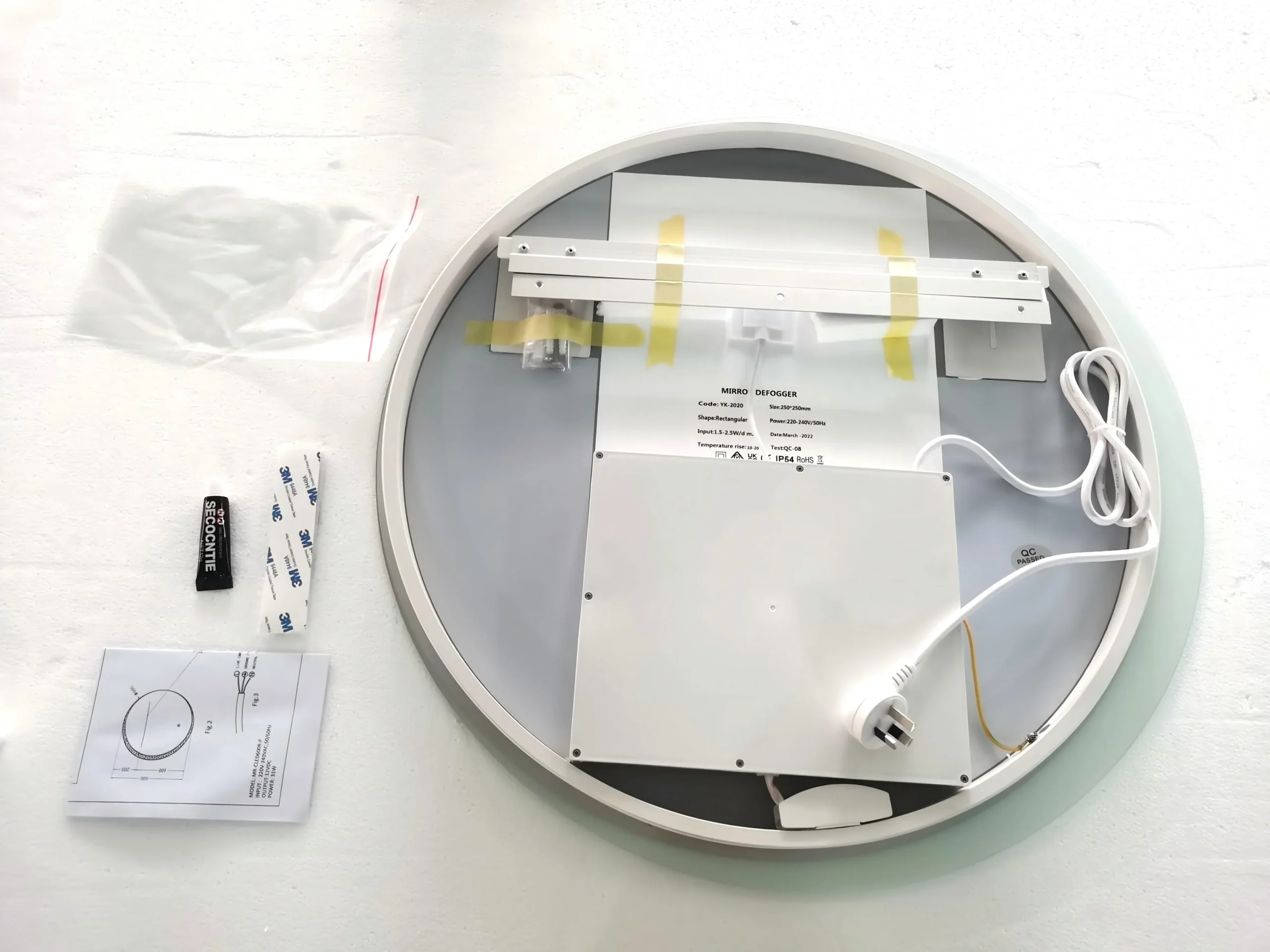
A modern LED bathroom mirror may also require rear space for LED strips, drivers, wiring, mounting rails and structural components. The manufacturer therefore needs to coordinate all of these elements during product development.
How Does Defogger Pad Placement Affect Performance?
Central Placement
A central pad works well for standard vanity mirrors because users normally look into the middle of the glass.
Vertical Placement
Taller mirrors may benefit from a longer vertical heating zone around the main viewing area.
Horizontal Placement
Wider vanity mirrors can use a broader horizontal heating area when the bathroom layout requires it.
Custom Placement
A bathroom mirror manufacturer can match the heating area to mirror size, basin location and user position.
Anti-Fog Control Options for LED Bathroom Mirrors
Independent Control
A separate control lets the user operate the defogger without turning on the mirror lighting.
Touch Control
An LED bathroom mirror can use a dedicated touch sensor to control the anti-fog function.
Combined Functions
Project designs can combine anti-fog control with lighting, dimming and color-temperature adjustment.
The final configuration should match the mirror design, user experience and electrical requirements of the project.
Why Hotels Use Anti-Fog LED Bathroom Mirrors
An anti-fog LED bathroom mirror for hotels can improve everyday usability because guests often use the mirror immediately after a hot shower. A properly positioned defogger helps keep the primary viewing zone clearer during periods of high humidity.
Hotel procurement teams should also evaluate product consistency, mounting systems, electrical specifications, packaging and installation requirements when sourcing mirrors for multiple guest rooms.
For more information about hotel mirror planning, explore our hospitality LED mirror project solutions .
What Should Buyers Confirm Before Ordering?
When working with a bathroom mirror manufacturer, buyers should define the anti-fog requirements together with the complete product specification. This approach helps reduce revisions before sample approval and mass production.
01. Mirror Dimensions
Confirm overall width, height and installation orientation.
02. Anti-Fog Coverage
Decide whether the project needs central coverage or a larger heating area.
03. Defogger Placement
Match the heating position to the primary user viewing area.
04. Control Method
Choose independent, touch or integrated operation according to project requirements.
05. Electrical Requirements
Confirm target-market voltage and electrical configuration.
06. LED Configuration
Define lighting style, brightness, color temperature and control functions.
07. Mounting System
Match the mounting hardware to the mirror structure and wall conditions.
08. Packaging & Branding
Confirm export packaging, private labeling, manuals and carton requirements.
Buyers can compare additional shapes, lighting styles and frame configurations in our LED bathroom mirror collection .
Anti-Fog Mirror Safety and Electrical Design
Bathroom environments combine moisture with electrical equipment, so manufacturers need to consider the defogger as part of the complete mirror electrical system.
- Select appropriate electrical components
- Use correct wiring and insulation
- Maintain reliable electrical connections
- Protect sensitive components from moisture exposure
- Secure the heating film firmly to the mirror
- Match voltage requirements to the destination market
- Inspect and test products before shipment
Product configurations and destination markets may require different electrical specifications, so buyers and manufacturers should confirm these details before production.
How Can Buyers Customize an Anti-Fog Bathroom Mirror?
A custom anti-fog bathroom mirror project can combine the defogger system with the complete mirror design. Buyers can define the appearance, heating coverage, lighting functions, electrical control and packaging according to the application.
An experienced LED bathroom mirror manufacturer can coordinate the mirror dimensions, defogger pad, lighting, mounting structure and other components as one complete product system.
For a broader overview of OEM, ODM and commercial mirror development, explore our bathroom mirror solutions .
Anti-Fog Bathroom Mirror FAQ
Does an anti-fog bathroom mirror keep the whole surface clear?
Not always. The defogger creates the strongest effect within its own heating area. Edges outside that zone may still develop light condensation.
Why does the center stay clear while the edges fog up?
Manufacturers usually place the heating pad behind the central viewing area. The center therefore receives more heat than the surrounding glass.
What defogger pad size should I choose for a bathroom mirror?
Choose the heating area according to mirror dimensions, orientation, user viewing position and the amount of anti-fog coverage that the project requires.
Can buyers customize the defogger position?
Yes, when the mirror structure allows it. The manufacturer can match the heating area to the intended viewing zone and installation orientation.
Can the anti-fog function work separately from the LED light?
Yes. An LED bathroom mirror can use an independent anti-fog control or integrate the function into its touch-control system.
Is a larger defogger pad always better?
Not necessarily. A larger pad increases coverage, but buyers should also consider power requirements, available rear space, component layout and project cost.
What should I ask an anti-fog bathroom mirror manufacturer before ordering?
Start with mirror dimensions, quantity, orientation, required anti-fog coverage, lighting functions, control method, destination market, mounting requirements and packaging specifications.
Choosing the Right Anti-Fog Bathroom Mirror for Your Project
An anti-fog bathroom mirror may look simple from the front, but the components behind the glass determine how effectively the system performs.
The defogger pad size and position determine the primary heated area. A mirror can therefore show a clear center while light condensation remains around the outer edges.
B2B buyers should look beyond the question of whether a mirror includes anti-fog functionality. A stronger project specification defines the required heating coverage, defogger position, control method, LED configuration and complete mirror structure before production begins.
Ready to Start Your Next Hospitality Project?
From initial design concepts to final product delivery, NISSIYA provides full-scale manufacturing support for hotels, resorts, and commercial developments worldwide. Let our engineering team help you translate your vision into reality with precision-engineered, commercially compliant mirror solutions.