
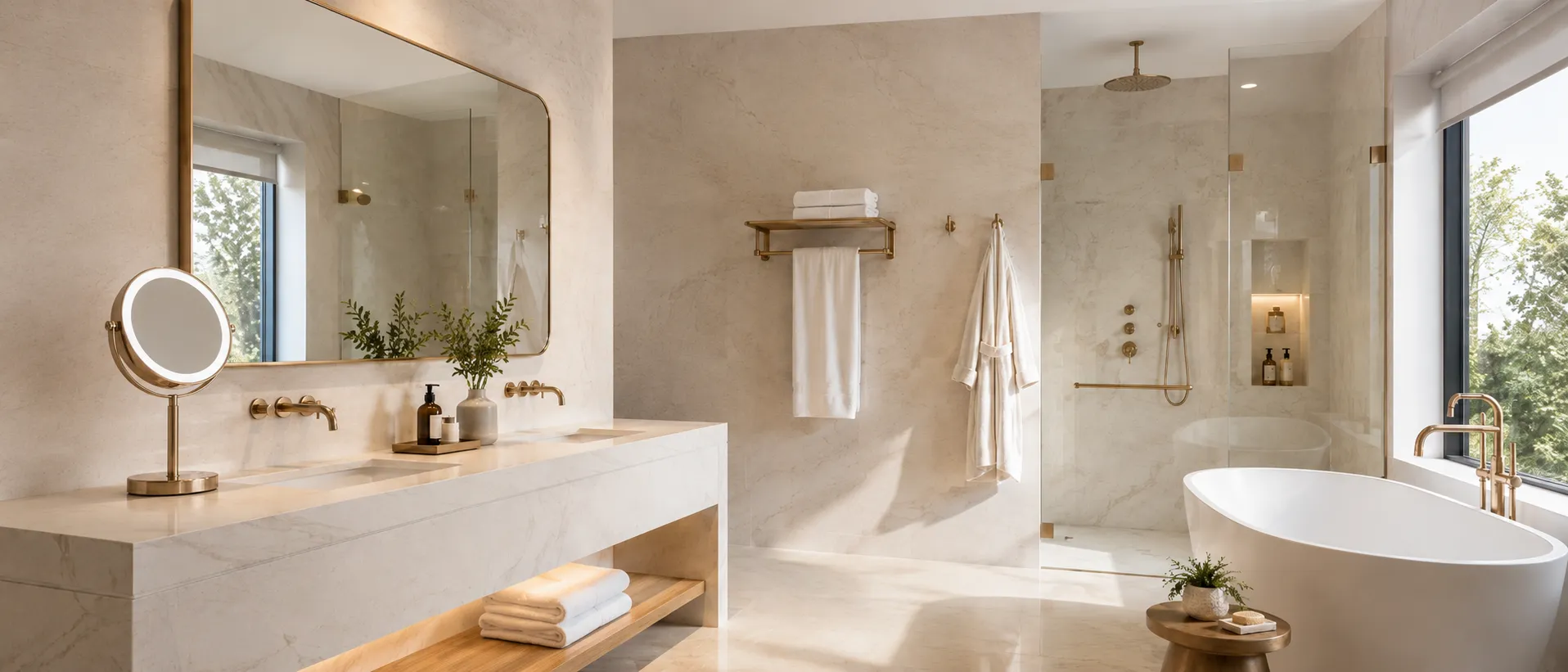
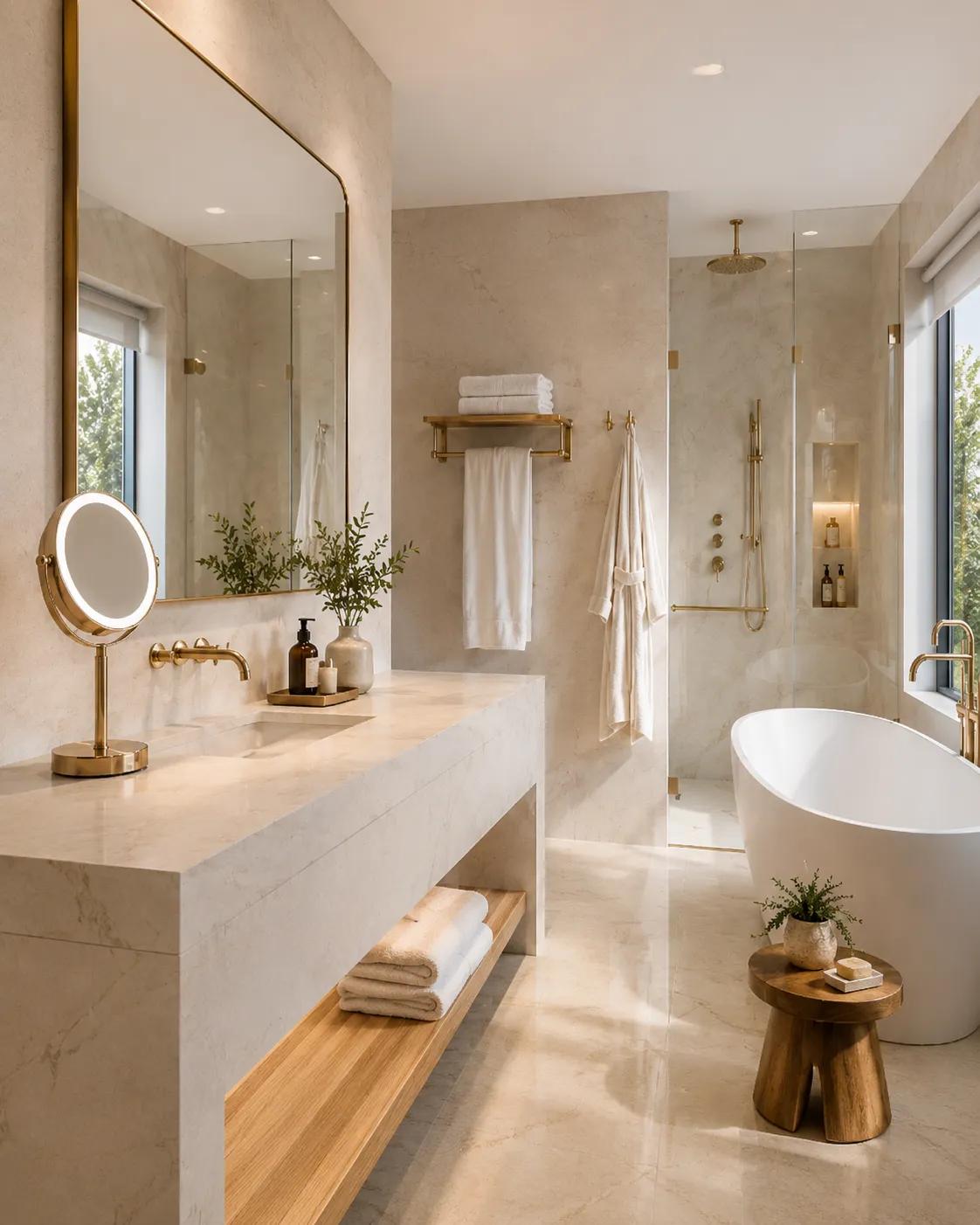
Two LED bathroom mirrors can look almost identical in a product photo but perform very differently after months or years of use.
The real difference often comes from details that buyers cannot see immediately: mirror glass, LED consistency, the driver, control system, wiring, anti-fog pad, mounting structure and packaging.
For distributors, retailers, contractors and hotel project buyers, LED bathroom mirror quality should involve much more than appearance or the number of smart functions on a specification sheet.
This guide explains the 10 main areas buyers should check before approving a sample or placing a larger order.
How Do You Check LED Bathroom Mirror Quality?
Check the mirror glass, lighting uniformity, color consistency, LED driver, electrical noise, controls, anti-fog performance, rear construction, mounting system and protective packaging. Buyers should also ask how the factory tests the mirrors before shipment.
10 Things Buyers Should Check
| Quality Area | What to Check | Possible Problem |
|---|---|---|
| Mirror Glass | Reflection clarity, flatness and edges | Distortion or visible defects |
| LED Lighting | Brightness and uniformity | Dark zones or visible LED dots |
| Color Temperature | Consistency between units | Different color appearance |
| LED Driver | Stable electrical output | Flickering or early failure |
| Noise & Flicker | Operation at all brightness levels | Buzzing or unstable light |
| Controls | Touch, sensor and memory response | Unresponsive or accidental activation |
| Anti-Fog | Pad size and heating area | Too little clear viewing area |
| Rear Structure | Wiring and component layout | Loose parts or difficult service |
| Mounting System | Bracket strength and installation design | Difficult leveling or unsafe installation |
| Packaging | Foam, corners, carton and surface protection | Breakage during transport |
Ask How the Factory Tests the Mirrors
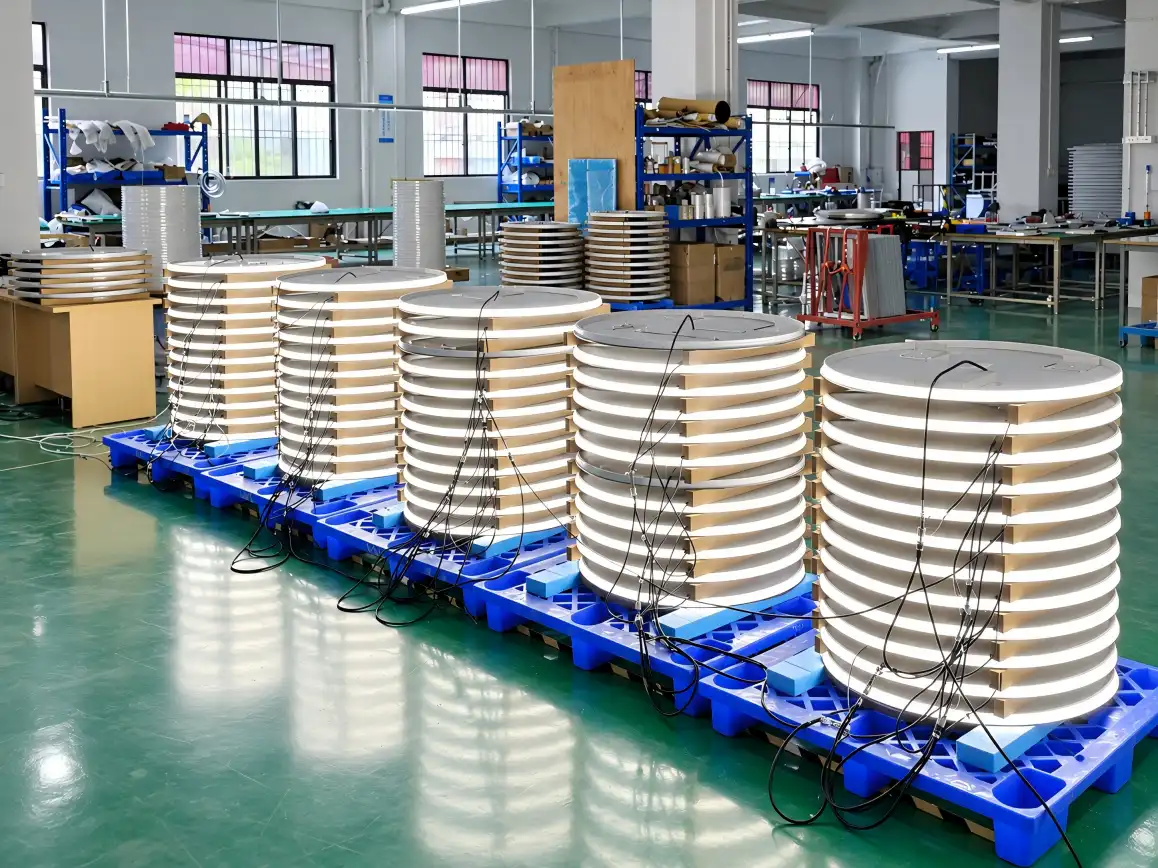
Factory testing gives buyers another way to evaluate LED bathroom mirror quality. A supplier should check the lighting, electrical functions and controls before packing the product.
Aging tests help the factory identify unstable lighting, driver problems, switch failures or other electrical issues before shipment.
Buyers can learn more about NISSIYA's inspection process and compliance approach on the LED Mirror Quality & Certification page.
Start With the Reflection, Not the Electronics
Before you test any smart function, stand in front of the mirror and inspect the reflection from several distances and angles.
Straight lines such as tiles, doors or cabinets should remain visually straight. Look for waves, local distortion, surface defects and poor edge finishing.
Mirror glass still performs the product's most basic job. Extra electronics cannot compensate for poor reflection quality.
Check Whether the Lighting Looks Even
Turn the mirror on in lower ambient light and inspect the illuminated area around the entire mirror.
The lighting should remain visually consistent without obvious dark areas, bright spots or uneven corners.
Front-lit designs should diffuse the individual LED points smoothly. Backlit mirrors should create a consistent halo around the mirror edge. Dual-light mirrors should provide balanced front and rear illumination.
For more information about different functions and lighting configurations, see our LED bathroom mirror features guide .
Compare Color Temperature Between Units
A small color difference may not matter much when someone buys one mirror for a home. The same difference becomes much more noticeable when a hotel, apartment or commercial project installs many mirrors together.
Buyers should ask the supplier how they control LED specification and color consistency during production.
If the mirror offers several CCT settings, test every mode and compare several samples whenever possible.
Check the LED Driver and Electrical Configuration
The LED driver supplies the power that the lighting system needs. Driver quality can influence lighting stability, noise and long-term reliability.
During sample inspection, turn the mirror on and off several times and leave it operating for an extended period. Watch for unstable light output or unexpected electrical behavior.
Buyers should also confirm the correct voltage and electrical configuration for the destination market and project requirements.
Test for Flickering and Electrical Noise
A quick showroom test may not reveal every electrical problem. Some issues only become noticeable after the mirror operates for longer periods.
Listen when the mirror runs at full brightness and at lower dimming levels. Watch for visible flicker and check whether the driver or controller produces distracting noise.
Test the full dimming range because some lighting problems only appear at low brightness.
Test Touch Buttons and Sensors Repeatedly
Touch controls should respond consistently without requiring repeated tapping. Motion or infrared sensors should react at an appropriate distance without unnecessary activation.
Project buyers should also check how the mirror behaves after the main power supply turns off and back on.
Some projects need memory functions, while others use the wall switch as the main control. Buyers should confirm this behavior before production.
Check the Actual Anti-Fog Coverage
The anti-fog icon alone does not tell buyers how much of the mirror the heating system can clear.
Check the size and position of the demister pad behind the glass. A larger pad covers a wider viewing area, while a smaller pad may only clear the central section.
Buyers should compare the anti-fog specification with the actual size of the mirror instead of evaluating the feature only from the front control panel.
Turn the Mirror Around Before Approving the Sample
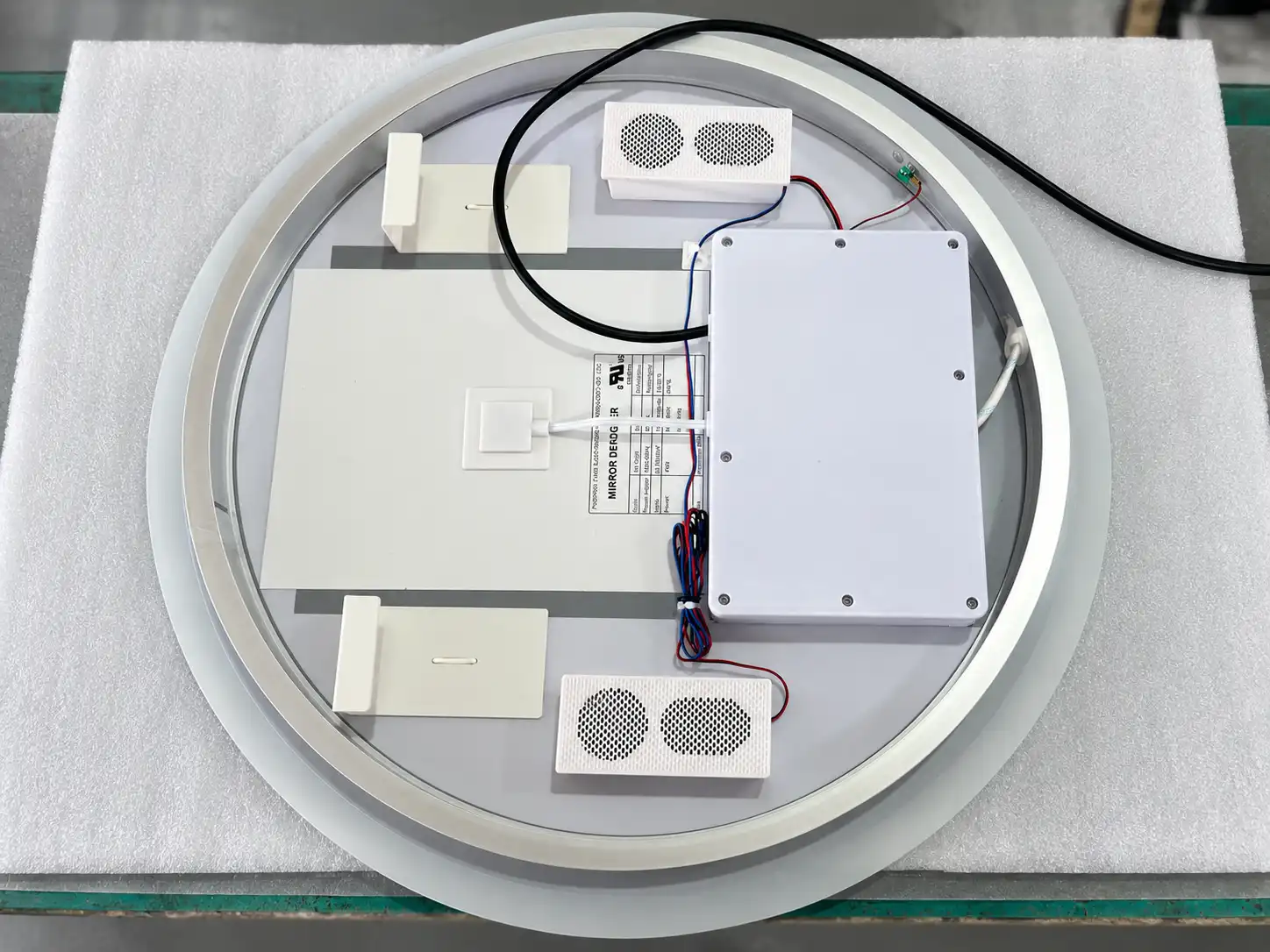
The rear structure often reveals quality differences that buyers cannot see from the front.
Check how the factory positions the driver, controller, demister and cables. The components should sit securely, and the wiring should look organized and protected.
A clear rear layout also helps technicians inspect or service components later. This becomes especially useful for distributors and hotel projects.
Ask for both front and rear product photos before approving a pre-production sample. A front image alone cannot show the internal electrical and mounting structure.
Inspect the Mounting System Before Installation
Installation problems can become expensive when a project uses dozens or hundreds of mirrors.
Check the mounting rail or brackets, wall clearance, cable position and leveling tolerance. Installers should have enough room to connect the power supply and position the mirror correctly.
Project buyers should coordinate these details with electrical and interior drawings before mass production starts.
Confirm IP Protection and Market Requirements
Bathrooms combine moisture and electrical components, so buyers should confirm that the selected model suits the intended installation environment.
Check voltage, driver specification, applicable IP protection and relevant market requirements.
Requirements differ between countries and projects. Buyers should confirm the applicable specification instead of assuming one configuration works everywhere.
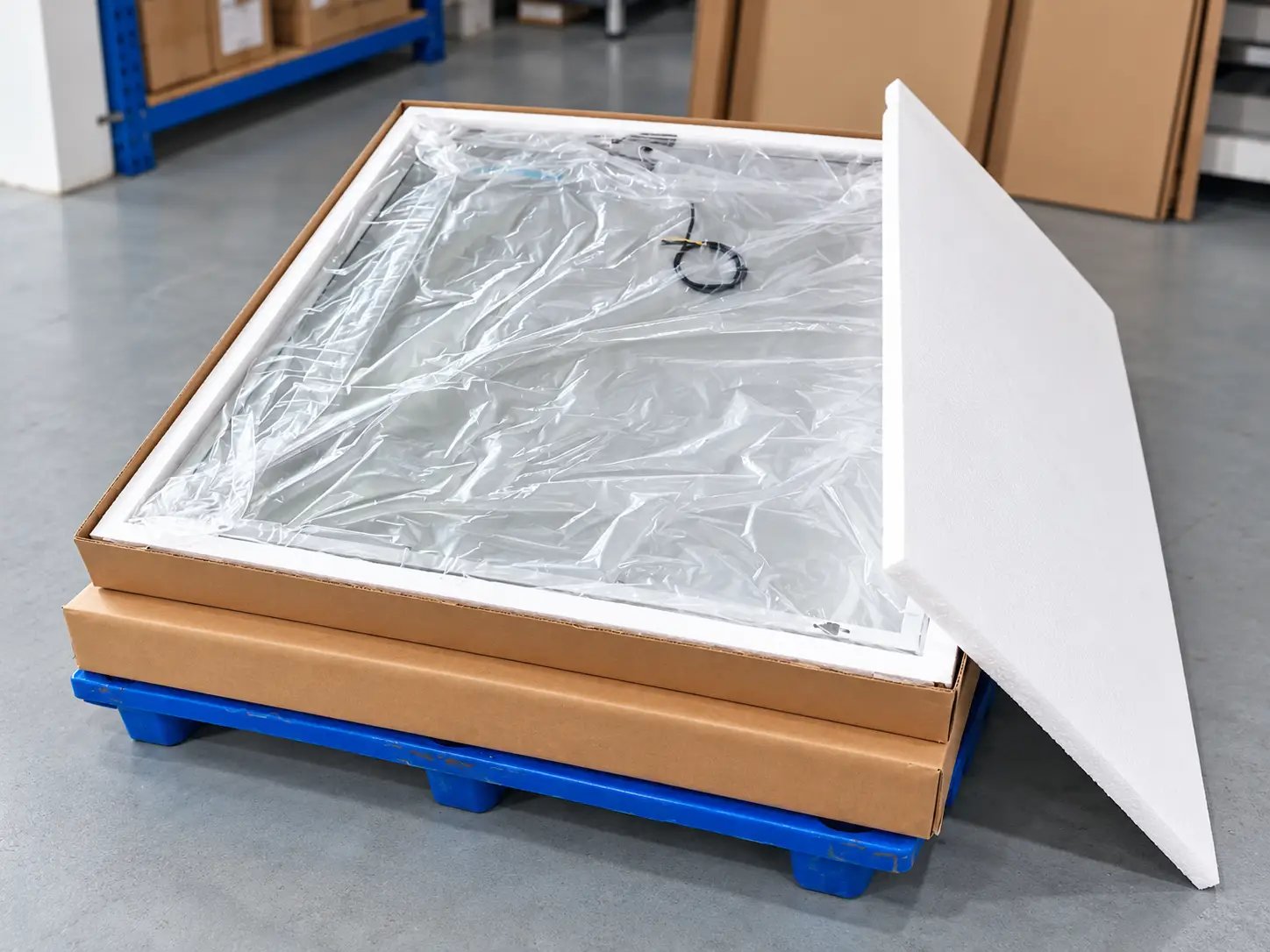
Packaging Is Part of LED Bathroom Mirror Quality
A mirror can leave the factory in perfect condition and still arrive damaged if the packaging does not protect it properly.
Buyers should check how the supplier protects the glass surface, corners, frame and accessories.
International shipments may pass through warehouses, trucks and containers several times. Strong packaging helps reduce breakage, replacement costs and delivery delays.
Can the Supplier Provide Replacement Components?
Serviceability matters for distributors and commercial projects. If a driver, controller or another electrical component develops a problem, replacing a small component may cost much less than replacing the entire mirror.
Ask whether the supplier can identify and provide replacement parts later. This becomes more important when a project contains many identical units.
For OEM, distribution and hospitality projects, NISSIYA recommends reviewing the complete mirror system instead of focusing only on visible features. Glass, lighting, electrical components, controls, rear structure, mounting, packaging and factory testing all contribute to product quality.
LED Bathroom Mirror Sample Inspection Checklist
| Test | What to Do | What to Look For |
|---|---|---|
| Reflection | View straight lines from several distances | No obvious waves or distortion |
| Lighting | Test in lower ambient light | Even illumination around the mirror |
| Dimming | Run from minimum to maximum | Smooth adjustment without unstable flicker |
| CCT | Cycle through every color setting | Consistent color performance |
| Controls | Operate switches or sensors repeatedly | Reliable response |
| Anti-Fog | Check pad size and operation | Coverage matches specification |
| Rear Structure | Inspect wiring and mounted components | Secure and organized layout |
| Packaging | Inspect foam, corners and carton | Protection suits the shipping method |
Why LED Bathroom Mirror Quality Matters More in Large Projects
A small problem with one mirror can become a much larger issue when a hotel, apartment or residential development uses the same model across many rooms.
Color differences, sensor issues, difficult mounting or repeated electrical failures can increase installation time and after-sales costs across the whole project.
Hotel and commercial buyers should use the sample stage to check appearance, consistency, installation details and serviceability.
Buyers can review NISSIYA hospitality mirror projects for project application examples.
For hotel bathrooms that also need a dedicated grooming mirror, buyers can explore NISSIYA lighted makeup mirrors for wall-mounted and magnifying mirror options.
What Should OEM Bathroom Mirror Buyers Confirm Before Production?
OEM buyers should create a clear approved specification before mass production. A product image or general catalogue description does not provide enough detail.
The specification should cover mirror size, lighting structure, color temperature, controls, anti-fog configuration, electrical requirements, mounting method, frame finish, packaging and labeling.
Keeping the written specification aligned with the approved sample helps reduce differences between development and bulk production.
Buyers can compare different structures and applications in the NISSIYA bathroom mirror collection .
LED Bathroom Mirror Quality FAQs
How can I tell if an LED bathroom mirror is good quality?
Check the reflection, lighting uniformity, color consistency, driver, controls, anti-fog coverage, rear wiring, mounting system and packaging. You should also review the supplier's factory testing process.
What usually causes problems in an LED bathroom mirror?
Problems can come from the driver, controller, LED system, wiring, installation or other electrical components. The exact cause varies by product and situation.
Why does an LED bathroom mirror flicker?
Flicker may come from the driver, controller, LED system, electrical connection or incompatible components. Buyers should test the mirror across the full dimming range.
Does a higher price always mean better LED bathroom mirror quality?
No. Buyers should compare structure, components, testing, packaging and overall production consistency instead of judging quality from price alone.
Should buyers inspect the back of an LED bathroom mirror?
Yes. The rear view shows the wiring, driver, controller, demister, mounting parts and overall assembly quality.
Why does packaging matter when buying LED mirrors wholesale?
Strong packaging helps protect fragile glass and electrical components during warehouse handling and international transportation. It can also reduce replacement costs and delivery delays.
What should hotel buyers test before approving an LED mirror?
Hotel buyers should test reflection, lighting, color consistency, controls, anti-fog performance, electrical operation, mounting and serviceability before final approval.
Good LED Bathroom Mirror Quality Is More Than a Feature List
Anti-fog, dimming, adjustable color temperature and sensors can improve the user experience, but long-term value depends on the complete product.
Glass quality, lighting consistency, electrical components, controls, rear construction, mounting, packaging and testing all contribute to overall LED bathroom mirror quality.
For wholesale, OEM and hospitality buyers, a systematic sample inspection provides one of the best ways to reduce risk before larger-volume production.
From initial design concepts to final product delivery, NISSIYA provides full-scale manufacturing support for hotels, resorts, and commercial developments worldwide. Let our engineering team help you translate your vision into reality with precision-engineered, commercially compliant mirror solutions.