
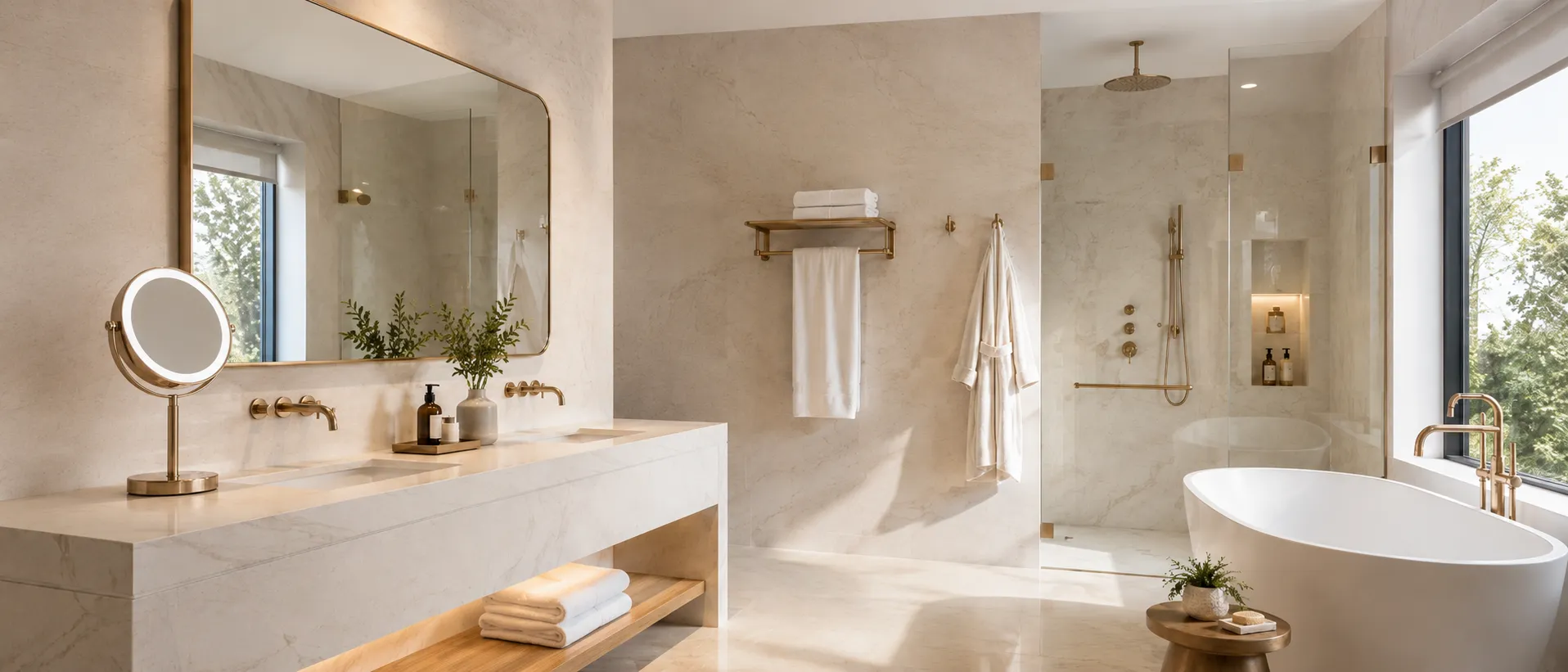
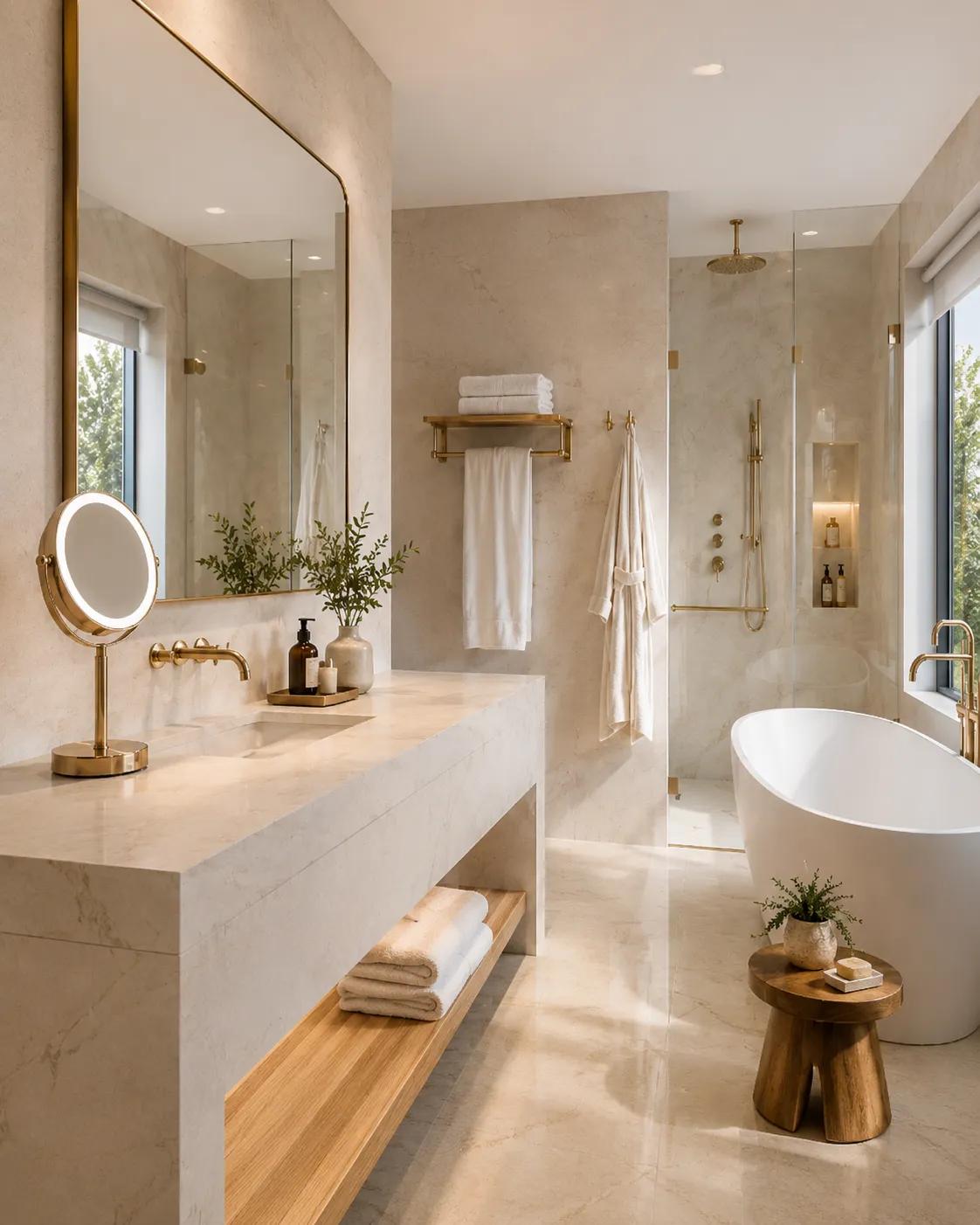
Choosing the right LED mirror color temperature is about more than deciding whether a bathroom should look warm or cool. Light color can influence the atmosphere around the vanity, how the mirror coordinates with the rest of the bathroom lighting, and how users perceive finishes such as stone, tile, wood and metal.
For LED bathroom mirrors, common choices include 3000K warm white, 4000K–4500K neutral white and 6000K cool white. Each creates a noticeably different visual effect, and the best option depends on the bathroom design, lighting plan, intended use and target market.
3000K vs 4500K vs 6000K LED Mirror: Quick Comparison
Color temperature is measured in Kelvin (K). Lower Kelvin values appear warmer, while higher values appear whiter and cooler. When the same LED mirror is viewed at different color temperatures, the difference can change the character of the entire vanity area.
Soft and inviting. Works well with warm stone, wood, beige finishes and hospitality interiors designed around a relaxing atmosphere.
Balanced between warm and cool. A versatile option for contemporary bathrooms and a wide range of neutral interior finishes.
Crisp and visually bright. Often used where a cleaner, cooler and more contemporary bathroom appearance is preferred.
What Does LED Mirror Color Temperature Mean?
LED mirror color temperature describes the visual appearance of the light produced by the mirror. It does not describe the physical temperature of the LED. Kelvin values simply indicate whether the emitted light appears warm, neutral or cool to the eye.
This matters because a bathroom mirror is only one part of the lighting environment. Ceiling fixtures, wall lights, vanity lighting, tiles, countertops and cabinetry all influence how the selected color temperature is perceived.
Buyers comparing different LED bathroom mirrors should therefore consider color temperature together with mirror design, lighting structure and the surrounding bathroom interior.
3000K Warm White: Soft and Relaxing
At around 3000K, an LED mirror produces a noticeably warm white appearance. The light introduces a soft yellow tone around the mirror and can make the vanity area feel more relaxed and inviting.
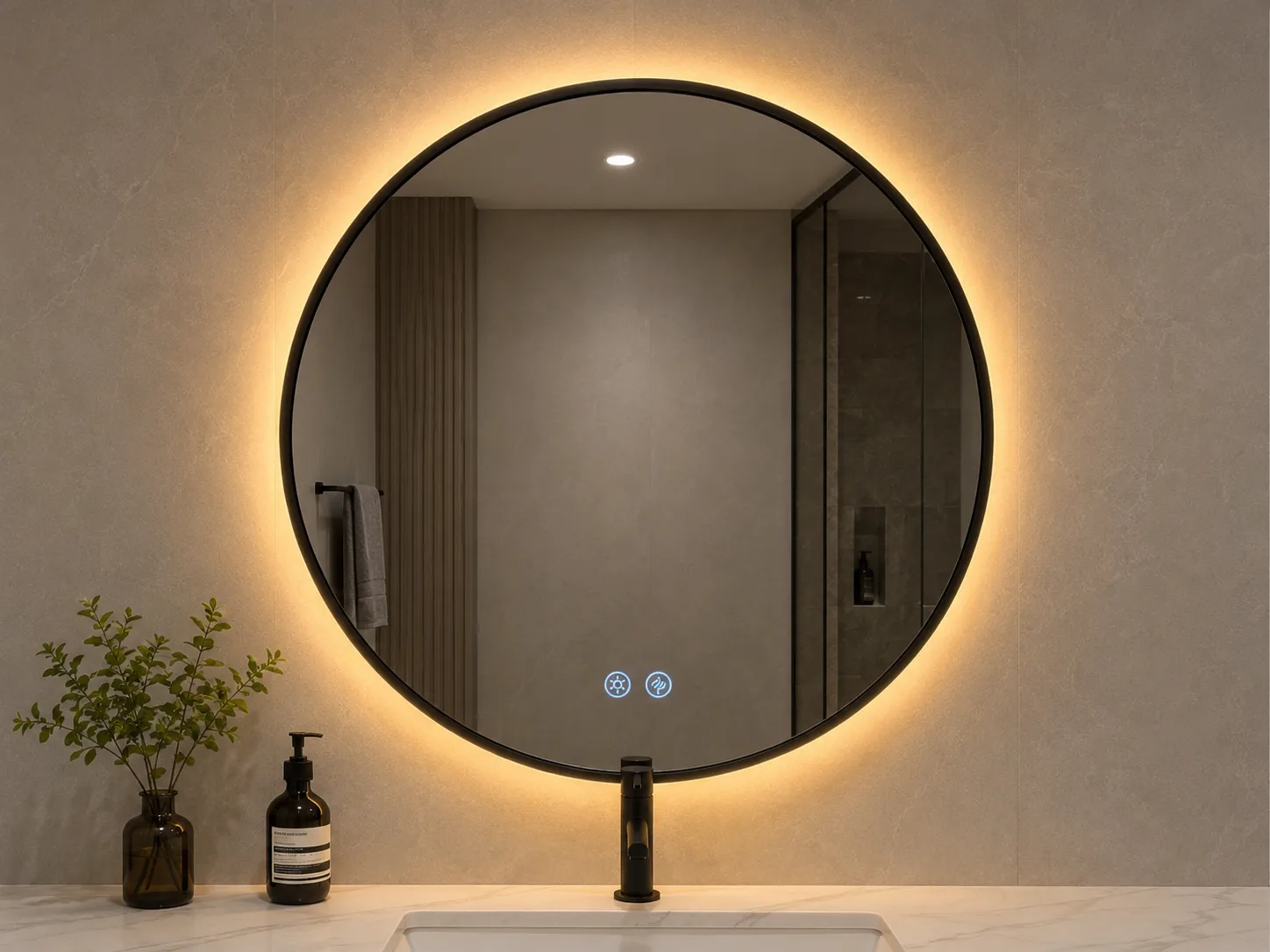
Warm white works particularly well with beige stone, warm marble, timber textures, bronze or gold hardware and other materials that already have warmer visual undertones.
In hospitality projects, 3000K can be especially attractive when the bathroom is intended to continue the warm lighting language of the guest room. It can help create a more comfortable evening environment rather than making the vanity feel dramatically brighter or cooler than the rest of the space.
4500K Neutral White: Balanced and Versatile
Neutral white generally sits between warm residential-style lighting and the cooler appearance of high-Kelvin white light. Around 4000K–4500K, an LED mirror typically looks cleaner than 3000K without creating the distinctly cool impression associated with 6000K.
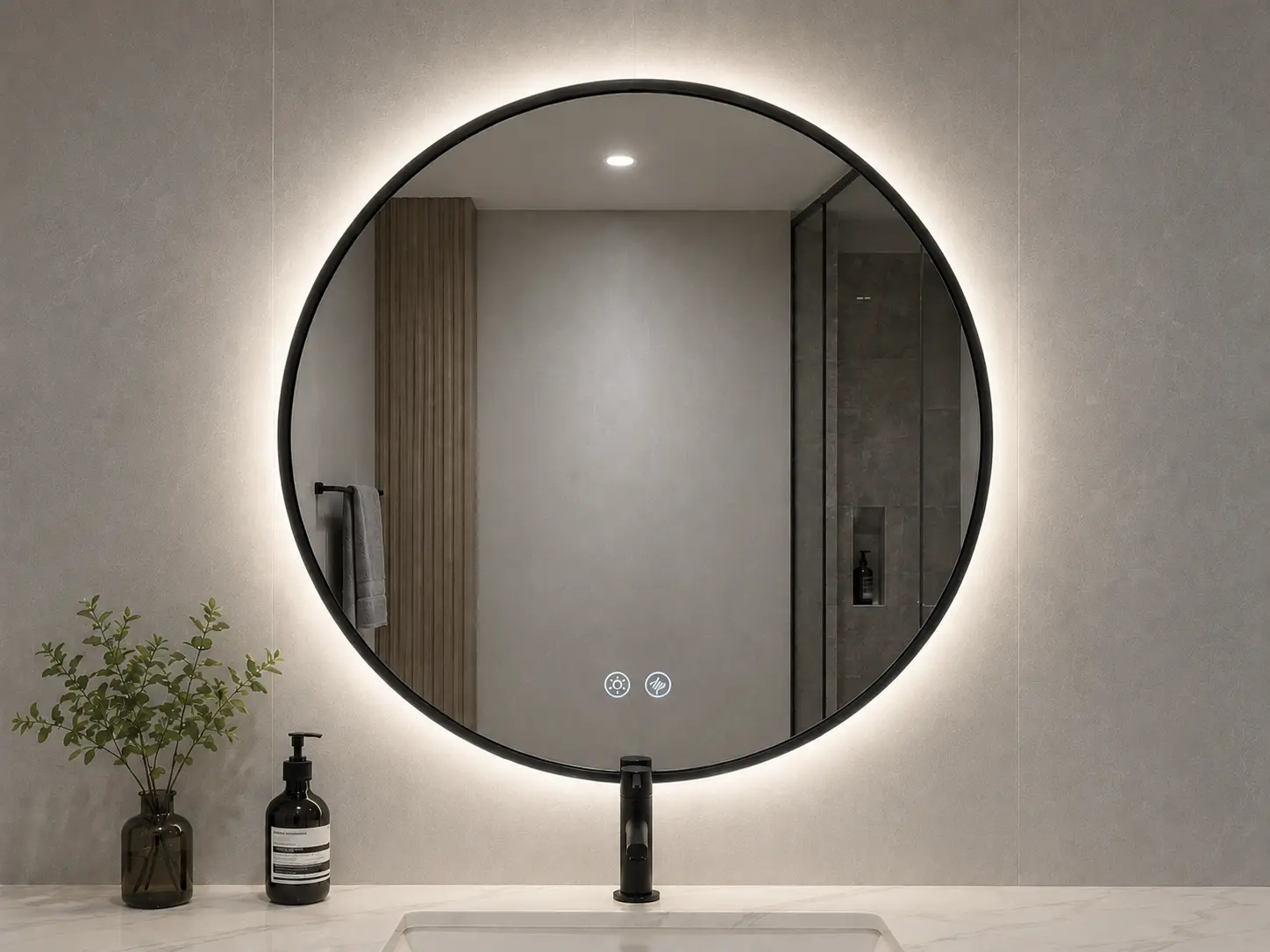
This makes 4500K a versatile option for contemporary bathrooms. It coordinates well with white, grey, stone and other neutral finishes and provides a middle ground for projects where designers do not want the mirror to look strongly warm or strongly cool.
Neutral white can also be useful for residential, hospitality and retail mirror ranges because it provides a broadly familiar visual appearance across different bathroom styles.
6000K Cool White: Bright and Crisp
At approximately 6000K, the light becomes noticeably cooler in appearance. This creates a crisp, clean visual effect that can work well in modern bathrooms built around white, grey, chrome or other cool-toned finishes.
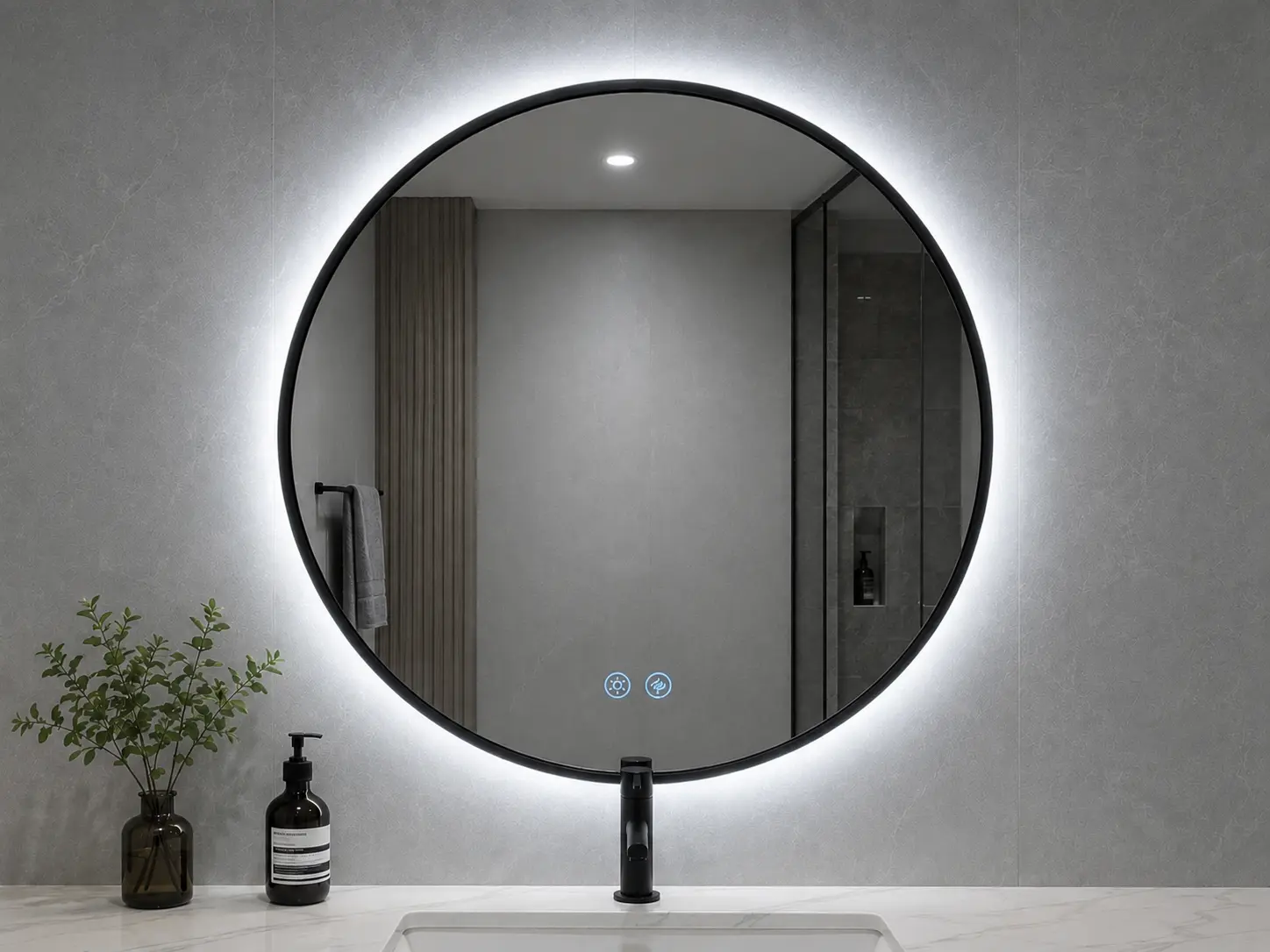
Cool white can create stronger visual contrast around the mirror, particularly against darker walls. Some users and markets also associate cooler white light with a cleaner and more contemporary bathroom aesthetic.
However, 6000K is not automatically better simply because it looks whiter. In a hotel room dominated by warm ambient lighting, wood or beige finishes, a very cool mirror can feel disconnected from the rest of the design.
Which LED Mirror Color Temperature Is Best for a Bathroom?
There is no single LED mirror color temperature that is best for every bathroom. The most suitable choice depends on surrounding lighting, interior materials and the atmosphere the designer wants to create.
The bathroom uses warm materials, relaxing ambient lighting or a hospitality design where comfort and atmosphere are priorities.
You want a balanced, neutral appearance that coordinates with a wide range of modern bathroom finishes.
The bathroom has a cooler contemporary design and the desired visual effect is crisp, clean and high contrast.
Color Temperature and Lighting Type Are Not the Same Thing
Color temperature describes the color appearance of the light, but it does not tell you how the light is distributed. This distinction is important when comparing backlit, front-lit and dual-light bathroom mirrors.
A backlit mirror mainly projects light toward the wall, creating an ambient halo around the mirror. A front-lit mirror directs more light toward the user and can provide stronger task illumination for grooming, shaving and makeup.
If you are still deciding between the two lighting structures, read our backlit vs front-lit bathroom mirror guide for a more detailed comparison.
What Color Temperature Works Best for Hotel Bathroom Mirrors?
Hotel bathroom mirror lighting should normally be treated as part of the complete guest-room lighting design. The mirror should complement ceiling fixtures, vanity lighting and the atmosphere of the bedroom rather than appearing as an isolated light source.
Warm hospitality interiors may naturally favor 3000K, while contemporary hotel bathrooms may use neutral white around 4000K–4500K. Cooler options can also be appropriate when they match the project design and lighting concept.
For hotel procurement, consistency matters as much as the chosen Kelvin value. When the same mirror is installed across dozens or hundreds of rooms, the color appearance should remain visually consistent across the project.
NISSIYA's hospitality LED mirror projects page provides more information about mirror solutions for hotels and commercial bathroom applications.
Why Adjustable 3-Color LED Mirrors Are Useful
A fixed color temperature works well when the bathroom lighting design has already been clearly defined. However, different users may prefer different lighting environments, which is why adjustable CCT has become a useful feature in modern LED mirrors.
A three-color mirror can allow the user to switch between warm, neutral and cool white lighting rather than permanently choosing one setting. Warm light may feel more comfortable at night, while neutral or cooler light may be preferred when the user wants a cleaner and brighter visual environment.
Adjustable lighting is also part of the broader development of modern mirror functions. Our guide to bathroom mirror trends explores how lighting control and other functions are influencing current mirror design.
Match the Mirror With the Rest of the Bathroom Lighting
One of the most common mistakes is selecting a mirror color temperature without considering the other light sources in the room. A warm 3000K ceiling fixture beside a very cool 6000K mirror can create an obvious visual mismatch.
For a more coordinated result, designers and project buyers should compare the mirror with ceiling lights, wall lights and vanity fixtures before confirming the final specification.
Wall and surface materials should also be considered. Warm stone and wood can reinforce lower color temperatures, while grey tile, chrome and cooler interior palettes can work naturally with neutral or cool white light.
Does a Higher Color Temperature Mean a Brighter Mirror?
Not necessarily. A 6000K light may appear visually crisper or whiter than 3000K, but color temperature and actual light output are different specifications.
Brightness depends on factors such as LED output, power, diffuser structure, mirror design and installation environment. Two mirrors can have the same color temperature while producing very different levels of usable light.
Common LED Mirror Color Temperature Mistakes
Color temperature and light output are different specifications. A cooler visual appearance does not automatically mean more brightness.
Mirror lighting should coordinate with ceiling lights, vanity fixtures and the overall bathroom lighting concept.
Lighting direction, brightness, diffusion and mirror placement also influence the final experience.
Different users and projects can have different preferences, which is why adjustable CCT can be valuable.
3000K vs 4500K vs 6000K: Which Should You Choose?
Selecting Color Temperature for a Mirror Project
For commercial or hospitality projects, color temperature should ideally be confirmed together with mirror dimensions, lighting structure, electrical requirements, surrounding fixtures and the interior design specification.
If you are evaluating an LED mirror specification for a hotel, distributor or commercial project, you can contact NISSIYA for LED mirror project support before sampling or mass production.
Final Thoughts
The best LED mirror color temperature is the one that works with the bathroom design, surrounding lighting and intended user experience. 3000K creates a warmer and more relaxing atmosphere, 4500K provides a balanced neutral appearance, and 6000K delivers a cooler, crisper visual effect.
Instead of choosing by Kelvin value alone, consider color temperature together with lighting type, brightness, surrounding fixtures and the way the bathroom will actually be used.
Ready to Start Your Next Hospitality Project?
From initial design concepts to final product delivery, NISSIYA provides full-scale manufacturing support for hotels, resorts, and commercial developments worldwide. Let our engineering team help you translate your vision into reality with precision-engineered, commercially compliant mirror solutions.