


Why is your bathroom mirror still streaky after cleaning? You wipe the glass, step back, and notice cloudy lines, white spots, or smudges appearing again. Bathroom mirror streaks can make even a recently cleaned bathroom look untidy.
Fortunately, many visible marks come from removable residue rather than permanent damage. Using too much cleaning solution, reusing a dirty cloth, or leaving water on the glass can create disappointing results.
However, not every cloudy mark is a cleaning problem. Hard water deposits, surface scratches, and deterioration of the reflective backing can produce similar complaints. Each requires a different response.
For hotel operators, a consistently clean mirror also affects the appearance of guest bathrooms. Housekeeping teams need an effective method that protects the glass, edges, and surrounding components.
This guide explains seven common causes of bathroom mirror streaks, a safer cleaning procedure, and practical maintenance steps for homes and hospitality projects.
Most streaks come from cleaning-product residue, contaminated cloths, excess moisture, or deposits left by water and personal-care products. The marks may become more visible after the glass dries.
For routine care, start with a clean, soft microfiber cloth lightly dampened with clean warm water. Wipe the surface gently, then dry it immediately with a second clean, dry, lint-free cloth.
Never spray liquid directly onto the mirror. Keeping cleaning products away from the edges and backing helps reduce the risk of long-term coating damage.
Bathroom Mirror Streaks: Cleaning Residue or Permanent Damage?
Before applying another cleaner, identify what the marks look like. Different patterns often suggest different causes.
For example, long wiping lines may indicate product residue. White spots can suggest dried water deposits, while dark areas near the perimeter may point to backing deterioration.
| Visible Symptom | Possible Cause | Recommended First Action |
|---|---|---|
| Long streaks following the wiping direction | Excess cleaner or an incomplete drying step. | Repeat with a lightly dampened cloth and dry immediately. |
| Cloudy film over a large area | Residual cleaning solution, soap, or repeated product buildup. | Try the manufacturer's approved cleaning method. |
| Small white spots or rings | Dried water droplets or mineral deposits. | Use gentle wiping first; seek approved treatment if marks persist. |
| Smears that move when wiped | Oily residue or a contaminated cloth. | Switch to a fresh, clean microfiber cloth. |
| Temporary haze after a hot shower | Surface condensation. | Allow ventilation and normal drying. |
| Dark spots around the mirror edge | Possible deterioration of the reflective coating. | Inspect the edge condition rather than applying stronger cleaners. |
| Fixed fine lines that never disappear | Possible scratches or another permanent surface defect. | Stop abrasive cleaning and arrange an appropriate inspection. |
These observations are useful clues, not a definitive diagnosis. If the marks do not change after safe cleaning, further inspection may be necessary.
7 Reasons Bathroom Mirror Streaks Return After Cleaning
Cleaning results depend on more than the product used. Cloth condition, water quality, bathroom humidity, and existing mirror damage can all influence the final appearance.
Using Too Much Glass Cleaner
Adding more cleaning solution does not always improve the result. Excess liquid can leave a thin film on the glass when it is not completely removed.
As the surface dries, residue may appear as long wiping lines or cloudy patches. Repeated applications can make the problem worse if each cleaning session leaves another layer behind.
Some cleaners also contain ingredients that are unsuitable for particular mirror constructions. A product intended for ordinary glass is not automatically approved for every silver-backed or illuminated mirror.
Recommended fix: Return to a minimal-moisture cleaning method using clean warm water and a soft cloth. Dry the glass immediately instead of repeatedly applying more product.
Cleaning with a Dirty or Contaminated Microfiber Cloth
Microfiber cloths can collect dust, grease, detergent residue, and particles during normal use. Reusing a cloth without checking its condition may transfer these contaminants back onto the mirror.
A cloth used previously on a bathroom countertop may also carry soap or cleaning chemicals. Consequently, the next wiping pass can spread residue rather than remove it.
Loose grit creates another concern. Hard particles trapped in the fabric may scratch the glass or nearby decorative finishes.
Recommended fix: Use a clean, soft, lint-free, grit-free microfiber cloth reserved for mirrors. Replace contaminated cloths and follow the fabric manufacturer's washing instructions.
Hard Water Spots and Mineral Deposits
Water droplets may leave visible mineral deposits as they evaporate. Bathrooms with mineral-rich water can develop small white spots, rings, or irregular marks around the mirror.
These deposits may become more noticeable after repeated exposure to splashes. A basic wipe can remove light residue, but older deposits may remain attached to the surface.
It is important not to treat a mirror exactly like a ceramic tile or shower wall. Acidic descaling products suitable for certain bathroom materials may be incompatible with mirror edges, backing, or surrounding finishes.
Recommended fix: Begin with clean warm water and gentle microfiber wiping. If deposits remain, request a cleaner or treatment approved for that specific mirror before using stronger chemicals.
Soap, Toothpaste, Cosmetics, and Personal-Care Residue
Bathroom mirrors regularly encounter small splashes and airborne residues. Toothpaste, soap, skincare products, and hairspray can leave spots or films on the reflecting surface.
Some marks become easier to see after the mirror dries. Others spread when a damp cloth passes across them, creating the appearance of new cleaning streaks.
Frequent use of multiple cleaning products may complicate the problem. Mixing residue from different products can make the resulting film harder to identify.
Recommended fix: Remove fresh splashes promptly using the approved mirror-care method. For persistent residue, follow the mirror supplier's guidance rather than increasing pressure or applying unapproved solvents.
Failing to Dry the Mirror Completely
A mirror can look clean while it is still damp. However, remaining droplets may dry unevenly and leave visible marks.
This often happens when the same wet cloth is used for both cleaning and finishing. As the cloth becomes saturated, it may stop absorbing moisture effectively.
Extra moisture can also travel toward the bottom edge. Over time, repeated liquid exposure may increase the risk of deterioration in vulnerable backing areas.
Recommended fix: Use a separate dry, lint-free cloth for the finishing pass. Pay particular attention to removing moisture from edges, seams, and surrounding frame details.
Humidity and Condensation After Showering
Warm, humid bathroom air can produce condensation on a cooler mirror surface. The resulting haze may be mistaken for cleaning residue.
Condensation behaves differently from an oily smear or dried mineral deposit. It may disappear naturally as the bathroom ventilates and the glass temperature changes.
An integrated defogger can help reduce condensation within its designed heating area. Nevertheless, the heating coverage and control method depend on the selected mirror.
Recommended fix: Allow adequate ventilation and observe whether the haze clears without further cleaning. For a mirror with an anti-fog function, consult NISSIYA's Anti-Fog Mirror Troubleshooting Guide.
Permanent Surface Damage or Mirror Backing Deterioration
Some marks cannot be removed because they are not sitting on the front surface as ordinary dirt. Scratches in the glass and deterioration behind the reflecting layer require a different assessment.
For example, dark discoloration near the perimeter may indicate corrosion of the reflective coating. Repeated moisture exposure, incompatible chemicals, and damaged edges can contribute to this long-term problem.
Permanent optical defects should not be treated by aggressive scrubbing. Such attempts may introduce additional damage without improving the reflection.
Recommended fix: Stop experimenting with abrasive or chemical treatments. Document the condition and ask the supplier whether inspection, authorized servicing, or replacement is appropriate.
For more information, read NISSIYA's guide to black edge corrosion on hotel bathroom mirrors.
These possible causes show why bathroom mirror streaks should not automatically lead to stronger cleaning chemicals. Identifying the type of mark is usually the more useful first step.
How to Remove Bathroom Mirror Streaks Without Damaging the Edges
A simple cleaning routine is often enough for ordinary surface dirt. The following process reflects conservative mirror-care guidance from established glass-industry and mirror manufacturers.
Always follow the instructions for your particular mirror if they differ. Special coatings, touch controls, decorative frames, or integrated lighting may require model-specific precautions.
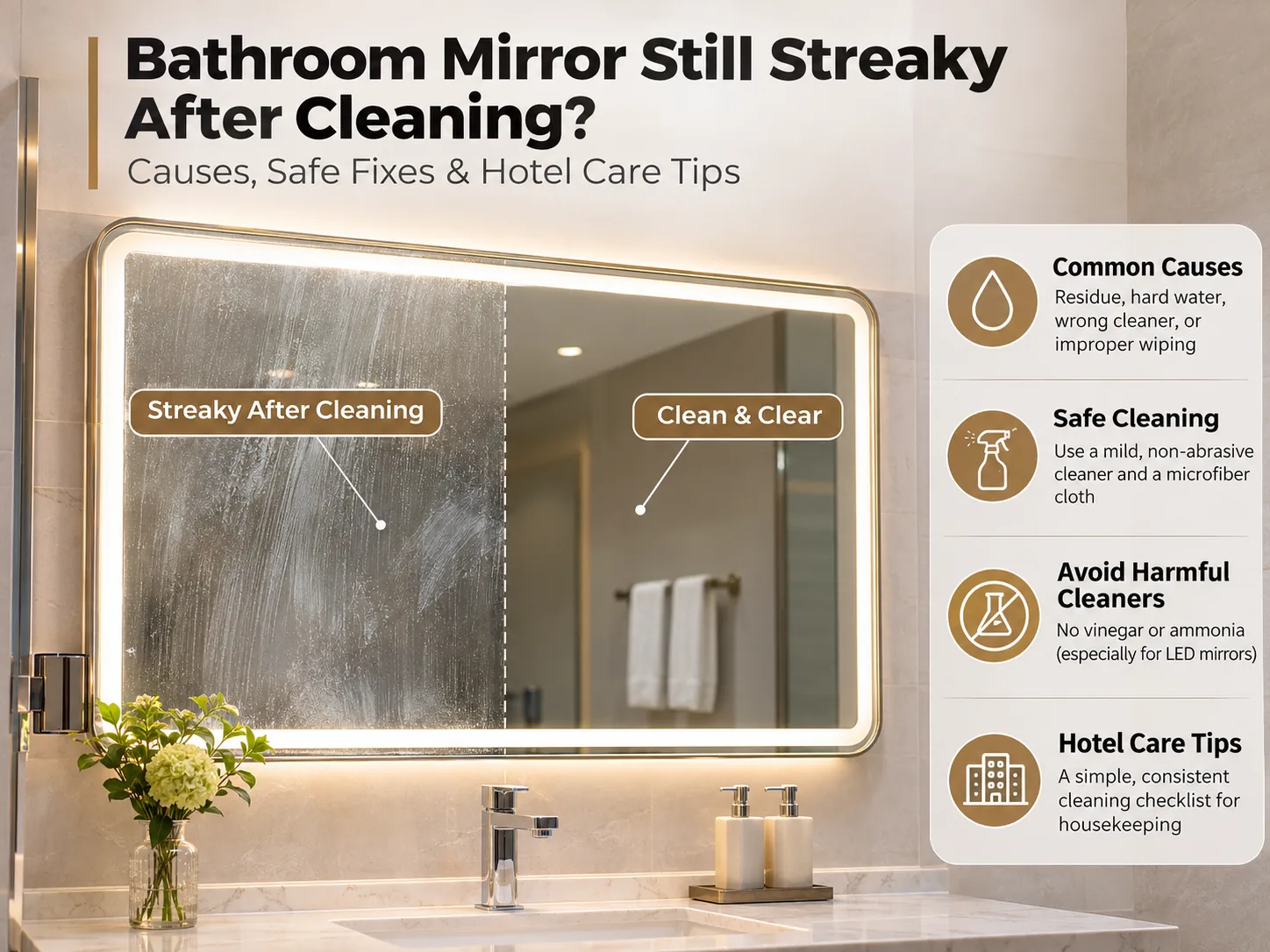
Check the Mirror Before Cleaning
Inspect the glass for loose grit, visible cracks, damaged edges, and unusual coating marks. Identify whether the problem is ordinary residue or a condition requiring professional assessment.
Prepare Two Clean Microfiber Cloths
Use one soft, grit-free cloth for the cleaning pass and another clean, dry cloth for finishing. Avoid reusing a cloth that has already collected bathroom chemicals or dirt.
Lightly Dampen the Cleaning Cloth
Apply a small amount of clean warm water to the cloth. Wring out excess liquid so the fabric is damp rather than dripping. Do not spray the mirror directly.
Wipe the Glass Gently
Clean using overlapping strokes and light pressure. Start with the main glass surface, taking care not to push liquid into exposed edges, joints, decorative frames, or electrical controls.
Remove Remaining Moisture
Use the second, dry cloth to wipe the surface immediately. A dry finishing pass helps reduce bathroom mirror streaks caused by leftover moisture and cleaning residue.
Inspect the Reflection Under Normal Lighting
Look at the glass from a comfortable viewing position. If a localized smear remains, repeat the gentle process with a fresh section of cloth rather than applying a stronger cleaner immediately.
Dry the Edges and Check the Final Result
Make sure visible joints, lower edges, and adjacent finishes are dry. If stubborn marks remain after appropriate cleaning, stop and request the mirror manufacturer's recommended treatment.
Practical tip: The final dry pass is just as important as the initial cleaning pass. Using a second clean cloth also helps prevent residue from being spread back across the glass.
Important safety note: Do not allow cleaning liquids to enter electrical housings, touch controls, or exposed wiring. Never remove a wall-mounted LED mirror to clean behind it unless the work is being performed under the approved installation and servicing procedure.
Can Vinegar or Ammonia Make Mirror Cleaning Problems Worse?
Online discussions often recommend vinegar-based mixtures for streaky glass. However, a product that works on ordinary window glass may not be suitable for a silver-backed mirror.
The National Glass Association's mirror cleaning guidance recommends clean warm water and a soft, lint-free cloth. It also advises against acid- or alkali-based cleaning products, abrasive cleaners, and commercial mirror cleaners containing vinegar or ammonia.
Similarly, Electric Mirror's care instructions emphasize microfiber cleaning, controlled moisture, and keeping liquids away from the mirror perimeter.
| Cleaning Material | General Guidance | Important Precaution |
|---|---|---|
| Clean warm water | A suitable first choice for routine mirror cleaning. | Apply to the cloth and dry the surface immediately. |
| Clean microfiber cloth | Recommended for gentle, lint-free wiping. | Ensure the cloth contains no grit or previous chemical residue. |
| Approved mirror cleaner | May be suitable when the mirror manufacturer permits it. | Confirm chemical compatibility before use. |
| Vinegar-based cleaner | Not recommended under the cited mirror-industry guidance. | Acidic products may affect vulnerable surfaces, edges, or backing. |
| Ammonia-based cleaner | Not recommended under the cited mirror-industry guidance. | Do not assume a common glass cleaner is suitable for every mirror. |
| Bleach or strong bathroom cleaner | Avoid unless specifically approved for the mirror. | May damage coatings, adjacent materials, or sensitive components. |
| Abrasive pad or scouring powder | Not appropriate for routine mirror cleaning. | May scratch glass or damage decorative surfaces. |
Important distinction: A cleaner labeled "safe for glass" does not necessarily mean it is suitable for mirror backing, exposed edges, frames, or electronic controls. The approved cleaning procedure for the complete mirror takes priority.
Some difficult deposits require specialized treatment. Nevertheless, stronger chemicals, abrasive tools, or sharp blades should not become the default solution. Consult the supplier when gentle cleaning cannot remove a persistent mark.
Are Bathroom Mirror Streaks Permanent?
One useful distinction is whether a mark changes during safe cleaning. Ordinary dirt and surface residue may move, fade, or disappear. Damage to the reflective layer generally does not behave the same way.
Cleaning Film and Fingerprints
Smudges and wiping lines may change position when cleaned. Start by removing product residue with a clean damp cloth, followed by immediate drying.
White Water Deposits
Light mineral spots may improve with ordinary cleaning. Older deposits may require a specific supplier-approved method, especially when they sit near vulnerable edges.
Temporary Condensation
Steam-related haze often changes as the bathroom temperature and humidity stabilize. Cleaning the mirror repeatedly may not solve the underlying ventilation issue.
Dark Edges and Fixed Defects
Black edge marks, scratches, and some persistent cloudy areas may indicate damage beyond removable surface residue. Supplier assessment is more appropriate than aggressive cleaning.
If reflected straight lines appear bent rather than merely cloudy, the problem may involve mirror flatness or mounting pressure. NISSIYA's Bathroom Mirror Distortion Guide explains that separate issue.
Bathroom Mirror Streaks: A Hotel Housekeeping Checklist
In hospitality properties, bathroom mirrors may be cleaned frequently across many guestrooms. A simple standard operating procedure can make the result more consistent while reducing unnecessary chemical exposure.
The cleaning team should use the approved method for the installed mirror model. A decorative framed mirror, frameless silver mirror, and LED mirror may have different vulnerable components.
Use Dedicated Mirror Cloths
Keep mirror-cleaning cloths separate from those used on sinks, toilets, and countertops. This reduces accidental transfer of cleaning chemicals and abrasive particles.
Control the Amount of Water
Use lightly dampened cloths instead of spraying large quantities of liquid. Avoid runoff around switches, lower edges, and decorative frames.
Finish with a Dry Cloth
A dedicated drying step helps remove residual moisture. Staff should also check whether the glass looks clean from the guest's normal viewing position.
Protect Exposed Mirror Edges
Do not leave water collecting along the bottom perimeter. Visible joints and frame channels should be kept dry according to the product's care instructions.
Separate Cleaning from Repairs
Report persistent dark marks, damaged backing, unstable mounting, or unusual electrical behavior. These conditions require a maintenance response rather than extra scrubbing.
Keep Product-Specific Instructions
Record the approved cleaning products and methods for each mirror model. Consistent training is especially important when a hotel operates different types of mirrors.
A useful checklist should be simple enough for daily use. It can identify routine cleaning results and distinguish them from defects that must be reported to building maintenance.
| Inspection Point | Housekeeping Check |
|---|---|
| Mirror Surface | No visible fingerprints, wiping film, or removable spots. |
| Cleaning Cloth | Clean, soft, lint-free, and free of abrasive particles. |
| Cleaning Method | Approved cleaner applied to the cloth rather than directly onto the mirror. |
| Mirror Edges | No remaining liquid around exposed edges or joints. |
| Frame and Controls | Dry, undamaged, and cleaned according to the specific product instructions. |
| Damage Reporting | Persistent defects documented for maintenance or supplier review. |
Hotel maintenance recommendation: Keep cleaning instructions with the approved product documentation. Housekeeping staff should not have to guess which chemicals are suitable for a particular mirror.
Why Mirror Materials and Edge Protection Matter for Cleaning
Cleaning performance is partly a maintenance issue, but the mirror's construction also matters. Hotels often expect mirrors to maintain their appearance through repeated cleaning and years of bathroom humidity.
A bathroom mirror typically combines glass, a reflective coating, protective backing, and a mounting structure. Depending on the design, it may also include lighting, controls, frames, or fabricated cutouts.
NISSIYA works with 5mm eco silver mirror glass for applicable bathroom mirror designs. Project requirements may specify additional edge protection, finishing details, and suitable installation methods.
However, even a well-made silver mirror is not permanently immune to moisture or chemical damage. Care instructions remain important after installation.
Mirror Edges Require Special Attention
The reflective coating and protective backing are particularly vulnerable around exposed edges and fabricated areas. Repeated contact with unsuitable cleaning chemicals can increase deterioration risk.
A framed design may conceal part of the perimeter, but a frame can also retain moisture if its construction does not allow appropriate drying. For frameless mirrors, edge condition is directly visible.
Cleaning Requirements Should Be Part of Project Approval
Hotel buyers should confirm the mirror's cleaning instructions before bulk delivery. The approved documentation can include suitable cloths, permitted cleaners, restrictions around electrical components, and maintenance reporting procedures.
NISSIYA's Hotel Bathroom Mirror Specifications Guide explains broader product selection and project approval considerations.
A sample-room inspection provides another opportunity to evaluate the selected mirror. Buyers can check reflection quality, exposed edges, installation details, and routine maintenance access before approving larger quantities.
When Should a Streaky Bathroom Mirror Be Replaced?
Bathroom mirror streaks alone are not a reason to replace a product. Start with the approved cleaning procedure and inspect whether the marks are removable.
If the surface becomes clear after a proper cleaning and drying process, the original problem may have involved residue or technique. Adjusting the routine may prevent it from returning.
However, fixed scratches, significant reflective-layer deterioration, cracked glass, or damage affecting the mirror's safety deserve a different response.
For a hotel, repeated defects across multiple guestrooms should be documented before replacing a full production batch. The supplier and installer may need to examine the product specification, maintenance records, and site conditions.
Practical decision: Clean removable residue, investigate persistent stains, and arrange qualified assessment for structural or coating damage. Do not attempt to polish away permanent reflective-layer defects using abrasive products.
Bathroom Mirror Streaks: Frequently Asked Questions
Why does my bathroom mirror look streaky even after cleaning?
Common causes include excess cleaning solution, contaminated microfiber cloths, mineral deposits, and incomplete drying. Start with a clean cloth lightly dampened with warm water, then dry the mirror immediately.
What is the safest way to clean a bathroom mirror?
For routine cleaning, use clean warm water and a soft, lint-free cloth. Apply water to the cloth rather than directly onto the mirror. Remove residual moisture with a separate dry cloth and keep the edges dry.
Can I use vinegar to remove bathroom mirror streaks?
Vinegar is not recommended under the cited mirror-industry cleaning guidance. Acidic cleaners may damage vulnerable edges, backing, or other materials. Follow the specific mirror manufacturer's approved cleaning instructions.
Why do streaks appear again after the mirror dries?
Residual cleaning products, minerals, or contamination from the wiping cloth may become more visible as moisture evaporates. A fresh cloth and an immediate dry finishing pass may help reduce the problem.
How do I remove hard water spots from a bathroom mirror?
Begin with gentle cleaning using warm water and a soft microfiber cloth. If mineral deposits remain, ask the mirror manufacturer about a compatible treatment. Avoid applying unapproved acidic descalers or abrasive products.
Can bathroom mirror streaks be permanent?
Some apparent streaks are actually scratches, coating deterioration, or other permanent defects. If marks do not change after approved cleaning, professional inspection may be needed.
How should hotels clean LED bathroom mirrors?
Hotel staff should follow the model-specific care instructions, use soft lint-free cloths, and avoid direct spraying. Cleaning liquid must not enter electrical controls, exposed edges, or the rear structure.
Does an anti-fog mirror prevent cleaning streaks?
No. A defogger helps reduce condensation within its designed heating area. It does not remove soap residue, fingerprints, mineral spots, or cleaning-product film.
Keep Bathroom Mirrors Clear Without Damaging Their Edges
Bathroom mirror streaks are often caused by removable residue, excess cleaner, water deposits, or incomplete drying. A simple method using clean microfiber cloths and carefully controlled moisture is a sensible starting point.
Avoid treating every mark with stronger chemicals. Persistent stains, scratches, and black edge corrosion require different assessments.
For hotel operators, consistent housekeeping methods help preserve the appearance of guest bathrooms. Clear product-care instructions also make it easier for staff to recognize when a problem needs maintenance rather than another cleaning attempt.
NISSIYA encourages hotel and commercial project buyers to consider mirror material, edge protection, installation design, and maintenance requirements together. Long-term mirror performance depends on both product quality and suitable care after installation.
Ready to Start Your Next Hospitality Project?
From initial design concepts to final product delivery, NISSIYA provides full-scale manufacturing support for hotels, resorts, and commercial developments worldwide. Let our engineering team help you translate your vision into reality with precision-engineered, commercially compliant mirror solutions.