


Proper makeup mirror cleaning helps remove fingerprints, foundation marks, mascara spots and everyday dust without damaging a delicate magnifying surface. However, cleaning a lighted makeup mirror requires more care than wiping an ordinary piece of glass.
A wall-mounted magnifying mirror may include an LED lighting ring, rotating mirror head, metal frame and adjustable swing arm. Tabletop mirrors can also contain batteries, switches and other electrical components. Water or cleaning products should never be allowed to enter these sensitive areas.
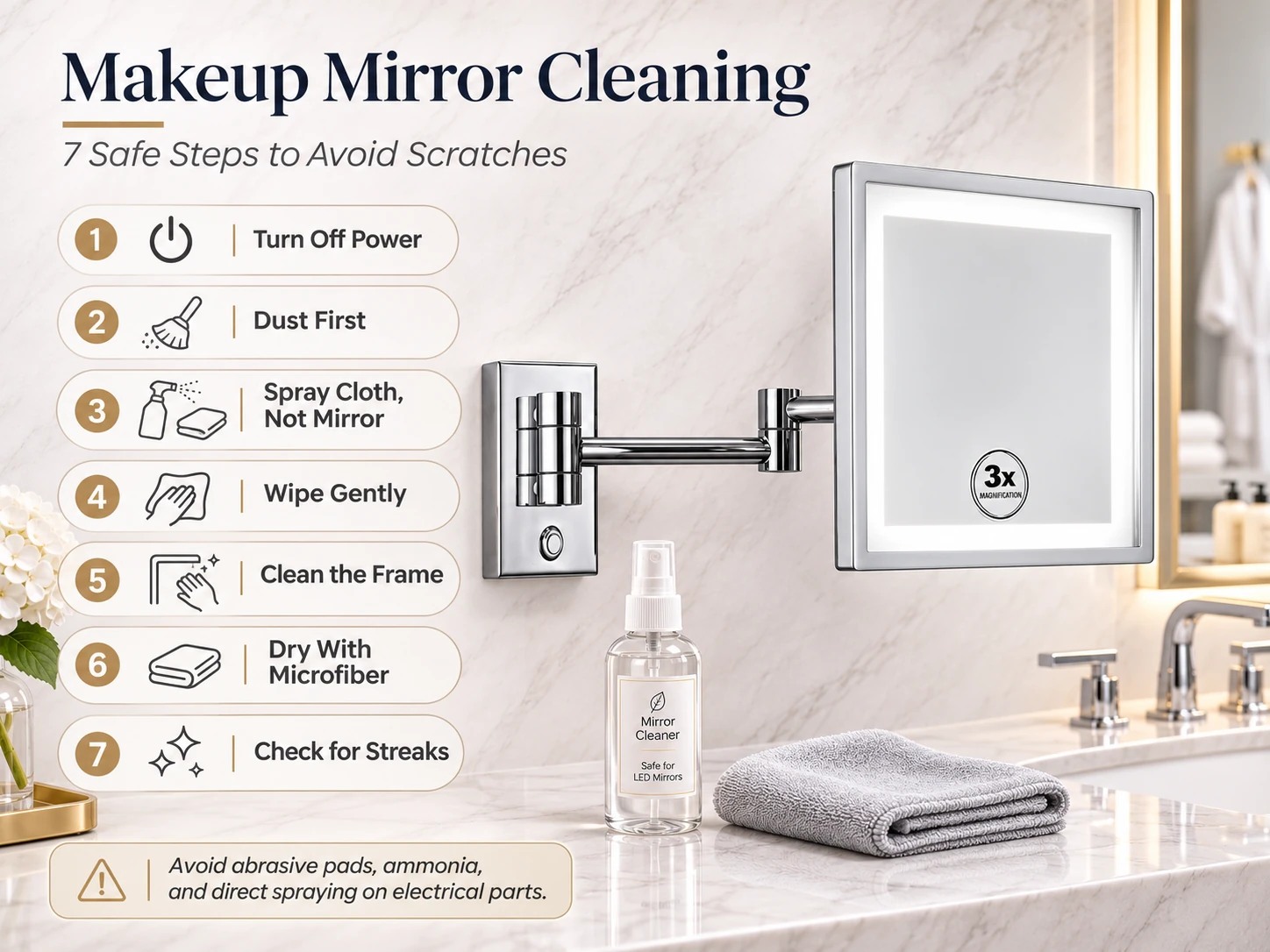
This guide explains seven practical cleaning steps, common mistakes and ways to handle stubborn makeup stains. It also includes a simple housekeeping checklist for hotels and other commercial properties.
Why Magnifying Makeup Mirrors Need Careful Cleaning
Magnifying mirrors are designed for detailed facial viewing. As a result, fingerprints, cosmetic residue and small water marks may become more noticeable during use. A 3X or 5X reflection can also make users pay closer attention to the apparent clarity of the mirror surface.
Different parts of the mirror may require different cleaning methods. The reflective glass, acrylic light guide, metal housing and electrical controls are not interchangeable surfaces.
For example, the NISSIYA ELITE 3X Lighted Makeup Mirror uses a double-sided 1X/3X mirror head with an acrylic LED light-guiding ring. The acrylic component helps distribute light around the mirror perimeter. It is not the reflective mirror glass.
Therefore, makeup mirror cleaning should consider the complete product assembly. A cleaner suitable for one surface may not be suitable for an acrylic ring, decorative finish or electrical control.
Makeup Mirror Cleaning: 7 Safe Steps
These seven steps provide a conservative approach to routine maintenance. Where a model has its own approved cleaning instructions, follow those instructions first.
1. Switch Off the Mirror Before Cleaning
Start by turning off the LED light. For a plug-in mirror, disconnect the power supply when it is safe and practical to do so.
A hardwired wall-mounted mirror may not have a user-accessible plug. In that case, follow the property's approved cleaning and electrical safety procedures. Do not open the electrical housing or attempt repairs during cleaning.
Allow the illuminated assembly to cool if it has become warm during operation. Then inspect the surface before applying moisture.
2. Remove Dust With a Clean, Soft Cloth
Loose dust should be removed before wiping away cosmetic stains. Otherwise, particles trapped between the cloth and glass may increase the risk of scratches.
Choose a clean, soft, lint-free microfiber cloth. Do not use a cloth previously used on the floor, metal fixtures or gritty surfaces.
Gently lift the loose dust from the glass without pressing firmly. For hotel housekeeping, a dedicated mirror cloth is preferable to a general bathroom cleaning cloth.
3. Slightly Dampen the Cloth With Water
For routine makeup mirror cleaning, plain clean water is a sensible starting point. Dampen the cloth lightly and wring out any excess liquid before touching the glass.
The surface should become lightly moist, not soaked. Avoid pouring water onto the mirror or spraying cleaning liquid directly onto it.
According to the National Glass Association's mirror cleaning guidance , a soft lint-free cloth and clean water provide a conservative starting method for ordinary flat glass mirrors.
A magnifying makeup mirror may also contain additional materials. Always confirm compatibility with the specific product instructions.
4. Remove Makeup Spots Gently
Mascara, foundation and other cosmetics can leave stubborn deposits. These marks may be more difficult to remove than ordinary fingerprints.
Begin with gentle wiping using the lightly dampened cloth. If a spot remains, allow a small amount of moisture to soften the residue briefly. Then wipe again without applying excessive pressure.
For particularly stubborn deposits, use only a cleaner that the manufacturer has approved for the exact mirror surface. Apply it to the cloth rather than directly onto the glass.
Avoid scraping residue with razor blades, scissors or other sharp objects. These tools can scratch the surface or damage nearby components.
5. Keep Moisture Away From the Edges
Mirror edges deserve particular attention during maintenance. Liquid that remains around a mirror edge may reach sensitive areas of the reflective backing.
For this reason, makeup mirror cleaning should avoid excessive liquid near the mirror rim. Do not allow cleaner to collect around the frame, joints or glass perimeter.
If an edge becomes wet, dry it promptly with a soft lint-free cloth. Repeated exposure to aggressive chemicals and persistent moisture can contribute to mirror edge deterioration.
For a related explanation, see NISSIYA's hotel mirror black edge corrosion guide . The article focuses on bathroom mirrors, but the importance of protecting reflective glass edges also applies to mirror care.
6. Clean the Frame, LED Ring and Arm Separately
After cleaning the reflective glass, inspect the surrounding product components.
Polished chrome, black finishes and other decorative surfaces may react differently to cleaning products. Use an approved soft cloth and avoid abrasive pads or aggressive polishing compounds.
For an LED makeup mirror, keep liquid away from the lighting assembly, switches, charging ports and seams. An acrylic light guide should not automatically be treated like uncoated glass.
The swing arm and joints should be wiped gently without forcing their movement. Avoid pushing liquid into the pivot mechanism or wall plate.
NISSIYA's makeup mirror materials guide explains the differences between brass, stainless steel and iron structures used across different product designs.
7. Dry the Mirror and Inspect the Reflection
Finish makeup mirror cleaning with a separate dry, lint-free cloth. Gently remove any remaining moisture from the glass and accessible surrounding areas.
Next, inspect the reflection under normal room lighting. Check for streaks, fingerprints, persistent stains and visible surface damage.
If the mirror is lighted, restore normal operation only after the accessible surfaces are dry and the product is safe to use.
A final visual inspection helps distinguish removable surface residue from damage that may require professional service or replacement.
How to Remove Common Makeup Mirror Stains
Not every mark requires the same cleaning response. The table below offers a starting point for common situations without recommending unverified chemical treatments.
| Common Problem | Suggested First Step | What to Avoid |
|---|---|---|
| Fingerprints | Gently wipe with a slightly damp microfiber cloth, then dry. | Dirty cloths and excessive pressure. |
| Foundation Marks | Lift loose residue first, then use a lightly damp cloth. | Scraping or abrasive scrubbing. |
| Mascara Spots | Carefully soften the spot with minimal moisture and wipe gently. | Razors, scissors and unapproved solvents. |
| Water Spots | Wipe using clean water on a soft cloth and dry immediately. | Allowing water to remain around mirror edges. |
| Cloudy Streaks | Use a clean cloth and remove leftover cleaning residue. | Adding excessive cleaner repeatedly. |
| Marks on LED Ring | Use the method approved for the light-guide material. | Direct spraying or abrasive cleaning pads. |
| Visible Scratches | Stop aggressive cleaning and inspect the actual surface. | DIY polishing powders or sharp tools. |
Why Does My Makeup Mirror Look Cloudy After Cleaning?
A cloudy appearance may come from leftover cleaner, fine dust, fingerprints or moisture streaks.
First, try a clean cloth with a small amount of water. Follow with a separate dry cloth. If the cloudiness disappears, residue was likely involved.
Persistent marks may indicate a different problem. Do not assume every cloudy patch can be removed by stronger chemicals or polishing.
If the reflected image itself looks unclear, viewing distance may also be relevant. NISSIYA explains this distinction in Why Is My 10X Mirror Blurry? .
Can Makeup Remover Be Used on Mirror Glass?
Some users try cosmetic removers when ordinary wiping fails. However, makeup remover formulas can contain oils, solvents or other ingredients that are not necessarily compatible with mirror assemblies.
Do not assume a product designed for skin is safe for decorative metal, acrylic or coated surfaces. Use a cleaning agent only when the mirror manufacturer approves it for that surface.
6 Makeup Mirror Cleaning Mistakes to Avoid
Many cleaning problems arise from using too much liquid or applying excessive force. The following mistakes can affect both ordinary mirrors and LED magnifying designs.
1. Spraying Cleaner Directly Onto the Mirror
Direct spraying makes it difficult to control where liquid travels. Cleaner may run into the frame, mirror edges, control panel or electrical assembly.
Instead, lightly dampen a soft cloth and wipe the intended surface. Keep the amount of liquid to a minimum.
2. Using Baking Soda or Abrasive Cleaning Pads
Baking soda pastes, rough sponges and polishing powders are sometimes suggested as household cleaning shortcuts. However, they can scratch sensitive mirror surfaces or damage decorative finishes.
Routine makeup mirror cleaning should never depend on abrasive scrubbing. When a mark does not respond to gentle wiping, check the care instructions before trying another method.
3. Using Harsh Chemicals Without Approval
Ammonia, vinegar, strong acids, alkaline cleaners and solvents can create compatibility problems with some mirror materials.
Therefore, avoid assuming that a general household glass-cleaning formula is automatically suitable for an integrated LED makeup mirror.
4. Cleaning With a Dirty Cloth
A microfiber cloth can collect small particles during normal use. If that cloth is reused without proper cleaning, the trapped particles may contact the glass.
Select a clean, grit-free cloth and replace it whenever visible dirt accumulates.
5. Allowing Water to Collect Near Electrical Parts
LED light guides, rocker switches, touch controls and charging ports have different construction details. A mirror designed for bathroom use should not be assumed suitable for direct water spraying.
For information about different control configurations, see NISSIYA Makeup Mirror Switch Types .
6. Ignoring the Frame and Mirror Edges
Cleaning only the central glass may leave moisture or residue around the perimeter. Over time, repeated poor cleaning practices can affect the appearance of surrounding components.
Always dry the accessible edges, joints and frame after routine maintenance.
Cleaning a Lighted Mirror vs a Non-Lighted Mirror
The reflective surfaces may require similar gentle care. However, a lighted model introduces additional components that need protection.
Lighted Makeup Mirror
Clean the reflective glass carefully. Also protect the LED ring, controls, ports and electrical seams. Turn off the light before cleaning, and follow the approved power and safety procedures.
Non-Lighted Makeup Mirror
Focus on the glass, frame, support structure and joints. Keep moisture away from the backing and metal assembly. Use only compatible cleaning products for the selected finish.
A non-lighted mirror eliminates the electrical cleaning concerns, but it still requires protection against scratches, moisture and surface damage.
Likewise, a lighted mirror should not be cleaned more aggressively simply because its outer ring has a smooth appearance.
Makeup Mirror Cleaning for Hotels: Housekeeping Checklist
Hotel makeup mirrors are used by guests with different grooming habits. Some may leave mascara, foundation or water marks on the glass after use.
A consistent makeup mirror cleaning procedure helps housekeeping teams inspect the same components in each guestroom.
The table below can serve as a starting checklist for a property's approved cleaning procedure.
| Inspection Area | Housekeeping Action | Escalation Trigger |
|---|---|---|
| Mirror Glass | Remove fingerprints and makeup residue using the approved cloth and cleaner. | Persistent scratches, cracks or unexplained marks. |
| Glass Edges | Check for moisture and dry accessible edges. | Black spots, damaged backing or visible deterioration. |
| LED Light Ring | Wipe externally using the approved material-specific method. | Cracking, moisture entry or abnormal illumination. |
| Switches and Controls | Keep dry and remove external dust carefully. | Unresponsive controls or visible damage. |
| Mirror Frame | Use a soft cloth compatible with the finish. | Peeling finish, corrosion or damaged components. |
| Swing Arm | Remove accessible surface dust without forcing the joints. | Loose joints, unusual movement or poor positioning stability. |
| Wall Base | Check visible cleanliness and external condition. | Loose fixing, movement or damaged electrical parts. |
What Should Housekeeping Staff Avoid?
Cleaning personnel should not disassemble the mirror, adjust factory-set joints or open electrical covers.
If a mirror becomes unstable, makes an unusual noise or fails to operate correctly, the issue should be reported to maintenance personnel.
For mechanical concerns, refer to NISSIYA's wall-mounted makeup mirror arm guide . Cleaning staff should not attempt to adjust factory-set pivots or electrical connections.
Should Hotels Use Disinfectant on Makeup Mirrors?
Routine visible cleaning and disinfection are different tasks. A disinfectant suitable for one bathroom surface may not be approved for mirror coatings, decorative finishes or LEDs.
Hotels should use their approved hygiene procedures while checking the chemical compatibility specified by the mirror manufacturer. Never apply an unapproved disinfectant simply because it is commonly used elsewhere in the bathroom.
What Hotel Buyers Should Check Before Bulk Ordering
Makeup mirror cleaning is also a useful consideration during product selection. An attractive mirror may require additional care around its shape, joints or lighting assembly.
Before approving a sample, ask housekeeping and maintenance personnel to evaluate the actual product design.
- Glass access: Can staff wipe the mirror surface without awkward hand positions?
- Frame design: Are there narrow areas that collect residue or remain wet?
- Light-guide material: Does the supplier provide a compatible cleaning method?
- Control placement: Can staff clean nearby surfaces without getting liquid into switches?
- Arm construction: Are the visible joints accessible for safe external cleaning?
- Finish care: Are the recommended products suitable for the approved metal finish?
- Documentation: Does the project include usable cleaning instructions for housekeeping?
For hotel and wholesale projects, NISSIYA offers different makeup mirror configurations. Cleaning access should be reviewed alongside magnification, lighting, arm stability and installation requirements.
What Real Users Say About Mirror Cleaning Problems
Consumer discussions also reveal why people search for better makeup mirror cleaning methods.
In a Reddit discussion about removing mascara from a mirror , a user explained that mascara marks were difficult to remove and expressed concern about scratching the surface.
Another discussion about streak-free hotel mirrors focused on cleaning methods that leave fewer visible marks.
These are individual experiences, not controlled cleaning tests. Some replies recommend methods that may be unsuitable for magnifying or LED mirror assemblies.
The practical lesson is simple: effective cleaning should remove residue while protecting the actual materials of the mirror. Aggressive techniques are not automatically better.
Makeup Mirror Cleaning: Frequently Asked Questions
What is the safest way to clean a makeup mirror?
Use a clean, soft, lint-free cloth. For routine marks, slightly dampen the cloth with water and wipe gently. Dry the surface immediately. Follow the product-specific cleaning instructions and keep liquid away from edges and electrical components.
Can I spray glass cleaner directly onto a makeup mirror?
Direct spraying is best avoided. Liquid can travel into the frame, glass edges, LED assembly or controls. Apply only an approved cleaner to a soft cloth instead.
How do I remove mascara from a magnifying mirror?
Start with a slightly damp microfiber cloth and gentle wiping. For stubborn spots, follow the manufacturer's approved stain-removal method. Do not scrape with blades or use abrasive products.
Can vinegar or baking soda damage a makeup mirror?
Acidic cleaners and abrasive pastes can be unsuitable for mirror surfaces, edges and decorative finishes. Avoid using them unless the exact product instructions explicitly allow the method.
How should I clean an LED makeup mirror?
Switch off the light and follow the approved electrical safety procedure. Clean the glass gently and keep liquid away from the LED ring, switches, ports and seams. Use a separate compatible method for the frame and light guide.
Can scratches be polished out of a magnifying makeup mirror?
Do not attempt DIY polishing with abrasive powders or sharp tools. First determine whether the mark is removable residue or actual surface damage. If the glass is scratched, contact the manufacturer about the appropriate service or replacement option.
How often should hotels clean makeup mirrors?
Follow the hotel's approved room-cleaning schedule and inspect visible guest-use residue during routine service. Increase attention when fingerprints or cosmetic stains are present. Report damaged or unstable products to maintenance staff.
Final Advice: Protect the Glass and the Complete Mirror
Good makeup mirror cleaning does not require aggressive scrubbing or large amounts of cleaning liquid.
Start with a clean soft cloth, use minimal moisture and dry the surface carefully. Keep electrical components, mirror edges and decorative finishes protected throughout the process.
For hotel projects, a consistent cleaning procedure can support better guestroom presentation and help maintenance staff identify potential product issues earlier.
NISSIYA recommends confirming the approved cleaning method for each selected product configuration before establishing a hotel housekeeping procedure.
Ready to Start Your Next Hospitality Project?
From initial design concepts to final product delivery, NISSIYA provides full-scale manufacturing support for hotels, resorts, and commercial developments worldwide. Let our engineering team help you translate your vision into reality with precision-engineered, commercially compliant mirror solutions.